
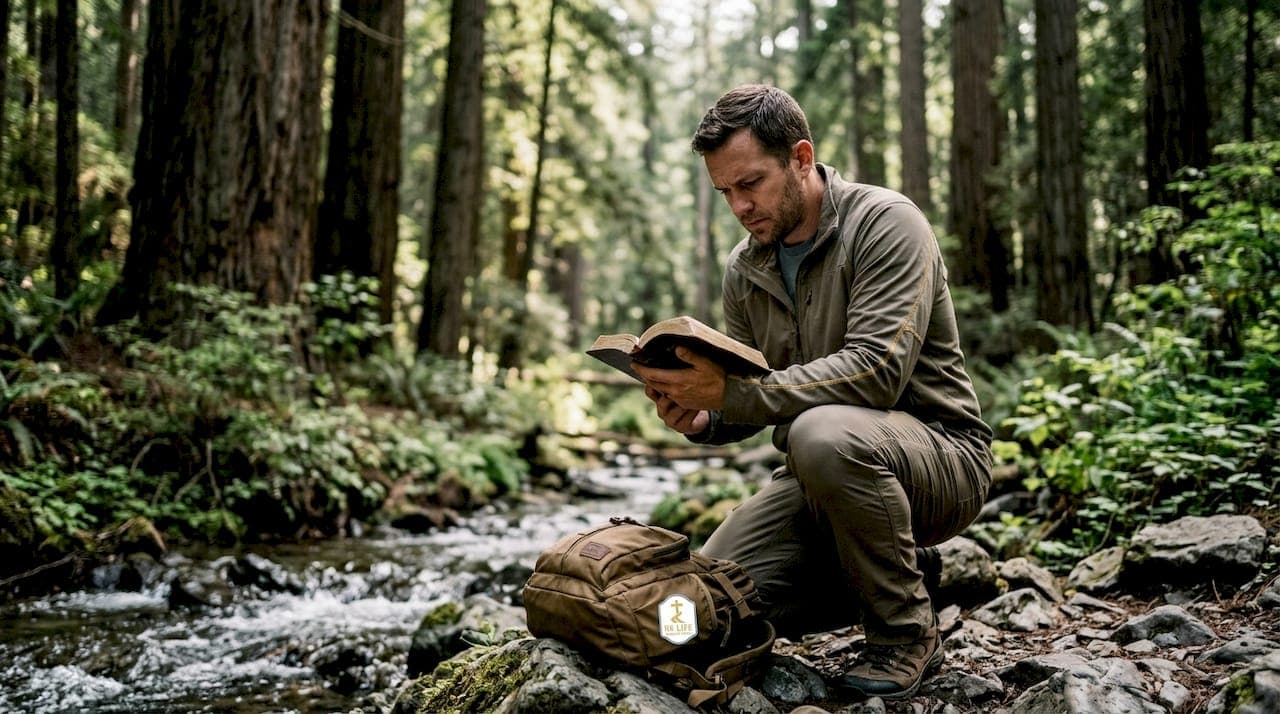
Faith grows through travel hardship because physical and psychological strain strips away the illusion of control, forcing a depth of surrender and reflection that comfortable routines rarely produce. This is not a modern self-help concept. Pilgrimage traditions across Christianity, Islam, and other faiths have treated travel hardship as spiritual medicine for centuries. Recent 2026 research on pilgrimage confirms what Romans 5:3–5 articulates plainly: suffering produces perseverance, perseverance builds character, and character generates hope. For travelers seeking genuine faith development, the road's difficulties are not obstacles to the journey. They are the journey.
Why faith grows through travel hardship: the core mechanisms
Three specific processes explain how travel challenges and faith intersect to produce spiritual growth. Understanding them helps you recognize what is happening when a trip goes sideways and your prayer life suddenly becomes very real.
-
Vulnerability through physical and psychological strain. Arduous journeys involving physical and psychological challenges drive spiritual growth by fostering vulnerability, surrender, and reflection. When your body is exhausted and your plans have collapsed, the performance layer of faith drops away. What remains is raw, honest dependence.
-
Surrender through loss of control. Pilgrimage hardships remove the possibility of controlling every outcome, pushing travelers to genuine reliance and real-time faith practice. This is not a gentle nudge. A missed connection, a broken-down RV, or a medical issue on the road forces the kind of surrender that Sunday morning rarely demands.
-
Reflection and moral reorientation. Distance from everyday routine creates space to examine your values, relationships, and spiritual priorities. Pilgrimage creates a context for repentance and moral reorientation through disruption of routine and physical exertion. That disruption is the point.
The progression described in Romans 5:3–5 maps this precisely: suffering produces perseverance, perseverance produces character, and character produces hope. Each stage requires the previous one. You cannot shortcut to hope without passing through the harder terrain.
Pro Tip: When a travel hardship hits, resist the instinct to immediately problem-solve. Pause for two minutes of honest prayer first. That brief surrender often reframes the entire situation spiritually before you take practical action.
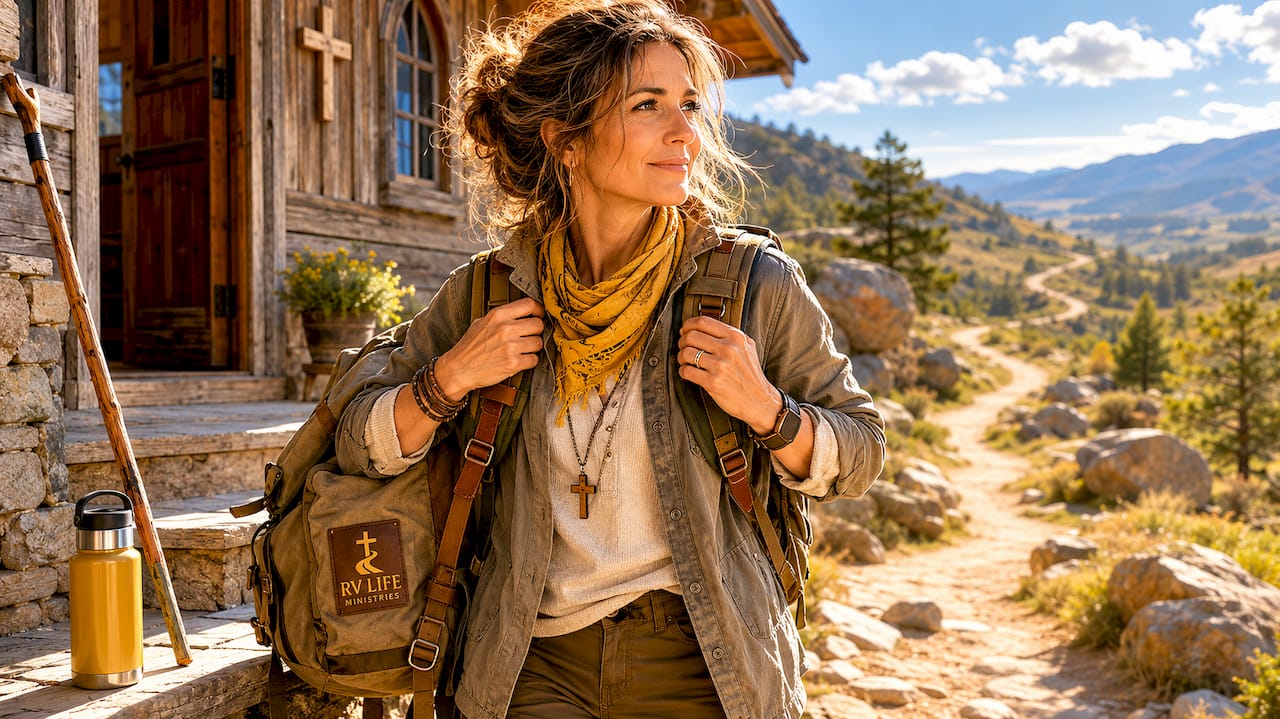
How pilgrimage traditions show faith development in difficult journeys
The connection between travel hardship and faith is not a new insight. It is the organizing principle of pilgrimage across world religions.
Medieval Christian pilgrimage to sites like Santiago de Compostela was explicitly penitential. Pilgrimage as penitential practice used physical hardship, distance from everyday life, and uncertainty as conditions supporting reflection, repentance, and moral reorientation. Pilgrims did not walk hundreds of miles despite the suffering. They walked because of it. The exhaustion and deprivation were reframed as penance, enabling resilience and moral improvement in ways that a comfortable retreat could not replicate.
Modern pilgrims report the same dynamic. One Camino pilgrim described how preparation aimed to lighten the physical load, but hardship itself reframed spiritual focus, redirecting attention from polished religious practice to real-time prayer and surrender. The blisters and wrong turns became the curriculum.
Here is a direct comparison of how Christian pilgrimage and Islamic tawakkul approach faith growth through travel hardship:
| Tradition | Core concept | How hardship is framed | Response to difficulty |
|---|---|---|---|
| Christian pilgrimage | Penitential journey | Hardship as spiritual medicine and penance | Surrender, reflection, and moral renewal |
| Islamic tawakkul | Active trust in God | Hardship as training for reliance on God | Effort plus surrender to outcomes |
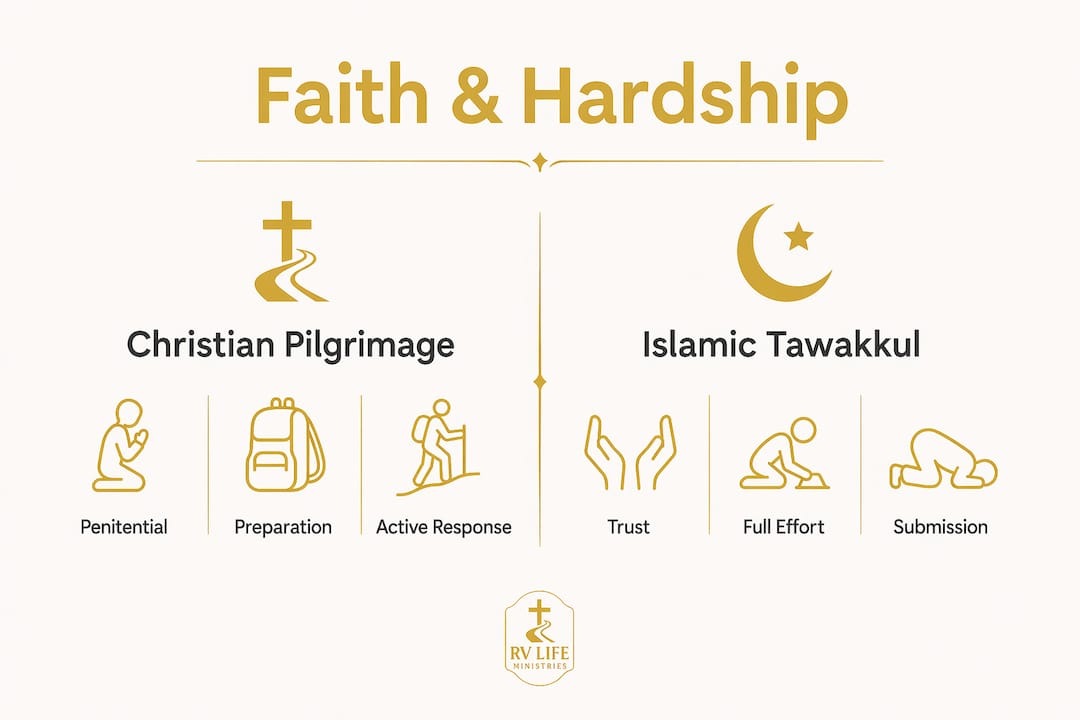
Both traditions reject passive resignation. Both insist that the traveler must act, prepare, and then release the outcome to God. The theology differs. The practical posture is nearly identical.
Pro Tip: Before your next trip, read one account from a pilgrim tradition different from your own. The Camino de Santiago memoirs and Hajj travel narratives both describe the same spiritual stripping-away. Seeing it across traditions builds confidence that what you experience on the road is a recognized, meaningful process.
What tawakkul and Christian endurance teach about trust during travel
Faith traditions offer specific frameworks for how to respond when travel challenges and faith collide. Two of the most developed are the Islamic concept of tawakkul and the Christian theology of endurance.
Tawakkul integrates active effort with surrender, transforming hardship into training for reliance on God rather than passive resignation. The Prophet's instruction, "Tie your camel, and then trust in God," captures this precisely. You do your part fully. Then you release the outcome. This transforms fear and anxiety into calm, because you are no longer responsible for what is beyond your control.
Christian endurance operates on the same logic. Romans 5:3–5 does not glorify pain. It describes a process: suffering is the raw material, not the goal. The goal is hope, and hope requires passing through the earlier stages. Several practical implications follow for travelers:
- Prepare thoroughly. Faith growth does not come from reckless endurance. Planning your route, maintaining your vehicle, and carrying emergency resources is the "tie your camel" step.
- Pray in real time. When plans change, the response is immediate prayer, not just problem-solving. This is what spiritual growth through adversity looks like in practice.
- Name what you cannot control. Explicitly identifying what is outside your power and handing it over in prayer is not weakness. It is the active practice of both tawakkul and Christian surrender.
- Expect the process to be uncomfortable. Both traditions are honest that this is not pleasant. The discomfort is the mechanism, not a sign that something has gone wrong.
The shared insight across these traditions is that faith is a dynamic response to hardship, not a feeling that arrives when conditions are comfortable.
Practical ways to grow your faith intentionally through travel struggles
Knowing why faith grows through travel hardship is useful. Knowing how to position yourself to receive that growth is what changes you.
-
Plan realistically before you leave. Effective faith growth requires effort and planning before surrendering outcomes. Anxiety during travel often comes from under-preparation, not from genuine spiritual testing. Reduce avoidable chaos so that when real hardship arrives, you can recognize it as meaningful rather than just stressful.
-
Practice surrender in small moments first. A wrong turn, a delayed campground check-in, or a rainy day at a destination you planned around are low-stakes opportunities to practice releasing control. Use them. The bigger surrenders become easier when you have rehearsed the posture.
-
Journal your hardships with spiritual questions. After a difficult travel day, write down what happened and then ask: What did I learn about my own trust? Where did I feel God's presence or absence? This practice turns experience into formation. Pilgrimage research identifies reflection as one of the central mechanisms of spiritual awakening during travel.
-
Lean into community when the road gets hard. Isolation amplifies hardship without producing growth. Sharing your struggles with fellow travelers, a church community, or a ministry like Rvlifeministries converts private suffering into shared testimony.
-
Practice gratitude during the difficulty, not just after it. Gratitude in the middle of a hard stretch is not denial. It is the active choice to interpret your circumstances through a faith lens rather than a frustration lens.
Pro Tip: Keep a dedicated travel prayer journal separate from your regular journal. Recording specific prayers made during hardships and then noting how they were answered over time builds a personal evidence base for faith. Reviewing it six months later is one of the most faith-strengthening exercises you can do.
Common misconceptions about spiritual growth through adversity
Several misunderstandings can undermine the faith growth that travel hardship is designed to produce.
- Hardship is not divine punishment. Difficulty on the road does not mean God is displeased with your trip. Pilgrimage hardship is spiritually valuable not because it causes pain, but because it reinterprets life circumstances, fostering moral and spiritual transformation. The same logic applies to a broken-down RV or a flooded campsite.
- Surrender is not the same as passivity. Releasing outcomes to God does not mean stopping your efforts. Tawakkul is not passive. Combining effort with spiritual release fosters durable faith during hardships. Sitting in a broken-down vehicle without calling for help is not faith. It is avoidance.
- Seeking hardship for its own sake misses the point. You do not need to manufacture suffering to grow spiritually. The road will provide enough genuine difficulty. The goal is to respond well to what comes, not to create unnecessary obstacles.
- Faith growth is not automatic. Hardship without reflection, prayer, or community produces bitterness, not faith. The growth comes from how you engage the difficulty, not simply from enduring it.
Recognizing these pitfalls keeps you from either spiritualizing every inconvenience or dismissing genuine trials as bad luck.
Key takeaways
Faith grows through travel hardship because the combination of physical strain, loss of control, and distance from routine creates the precise conditions for surrender, reflection, and spiritual transformation.
| Point | Details |
|---|---|
| Vulnerability is the entry point | Physical and psychological strain strips away performance-based faith and opens genuine dependence. |
| Pilgrimage traditions confirm the pattern | Both Christian penitential pilgrimage and Islamic tawakkul treat travel hardship as structured spiritual formation. |
| Effort precedes surrender | Thorough preparation is required before releasing outcomes. Faith growth is not reckless endurance. |
| Reflection converts experience into formation | Journaling and prayer after hardship transform raw difficulty into lasting spiritual growth. |
| Community amplifies the process | Sharing struggles with fellow travelers or a ministry community turns private suffering into shared testimony. |
What I have learned from the road about faith and hardship
I have been part of Rvlifeministries long enough to have watched hundreds of travelers move through the same arc: frustration, then surrender, then something that looks unmistakably like growth. The pattern is consistent enough that I no longer see a broken-down RV as a bad day. I see it as a scheduled appointment with the part of faith that does not show up in comfortable circumstances.
The thing most people get wrong is expecting surrender to feel peaceful in the moment. It rarely does. The first hour of a genuine travel crisis usually feels like panic, not prayer. What I have found is that the prayer does not have to come before the panic. It just has to come. Even a two-minute honest conversation with God in the middle of a stressful situation shifts the entire experience from something happening to you into something happening for you.
The other thing I would push back on is the idea that spiritual development requires a formal pilgrimage or a dramatic crisis. The RV life provides constant low-grade hardship: weather, logistics, mechanical issues, loneliness on the road. Every one of those moments is an invitation. Most people drive past them. The ones who stop and engage them spiritually come back changed.
My honest advice: stop waiting for the big spiritual moment. The small surrenders on ordinary travel days are where most of the real formation happens.
— Bo
Stay connected to your faith community on the road
Traveling full-time or seasonally does not mean your faith community has to stay behind. Rvlifeministries brings gospel-centered worship and teaching directly to RV parks across America, so you are never far from a community that understands the specific challenges of life on the road.
Whether you are parked for a week or passing through for a night, the church livestream keeps you connected to consistent teaching and worship no matter where your travels take you. Rvlifeministries also offers resources and community designed specifically for traveling believers who want to grow their faith through every mile, including the hard ones. Explore what is available and bring your faith community with you wherever the road leads.
FAQ
Why does travel hardship specifically grow faith?
Travel hardship removes the everyday structures that allow people to avoid genuine dependence on God. Physical and psychological challenges during travel force vulnerability and surrender, which are the core conditions for spiritual growth.
Is seeking out travel hardship a good spiritual practice?
Deliberately manufacturing hardship is not the goal. The point is to respond well to genuine difficulties that arise naturally during travel. Pilgrimage hardship is valuable because of how it reinterprets life circumstances, not because pain has inherent spiritual merit.
What does tawakkul mean for Christian travelers?
Tawakkul is an Islamic concept meaning active trust in God after full personal effort. Christian travelers can apply the same logic: prepare thoroughly, act responsibly, then release outcomes to God rather than carrying anxiety about what you cannot control.
How can I make sure hardship produces faith growth and not just frustration?
Reflection and prayer are what convert hardship into formation. Journaling specific struggles and praying through them in real time transforms raw difficulty into spiritual growth rather than accumulated bitterness.
Does RV travel count as a form of pilgrimage?
RV travel shares the core conditions of pilgrimage: physical challenge, distance from routine, uncertainty, and community. Rvlifeministries exists precisely because the road creates genuine opportunities for faith development that mirror what formal pilgrimage traditions have recognized for centuries.