
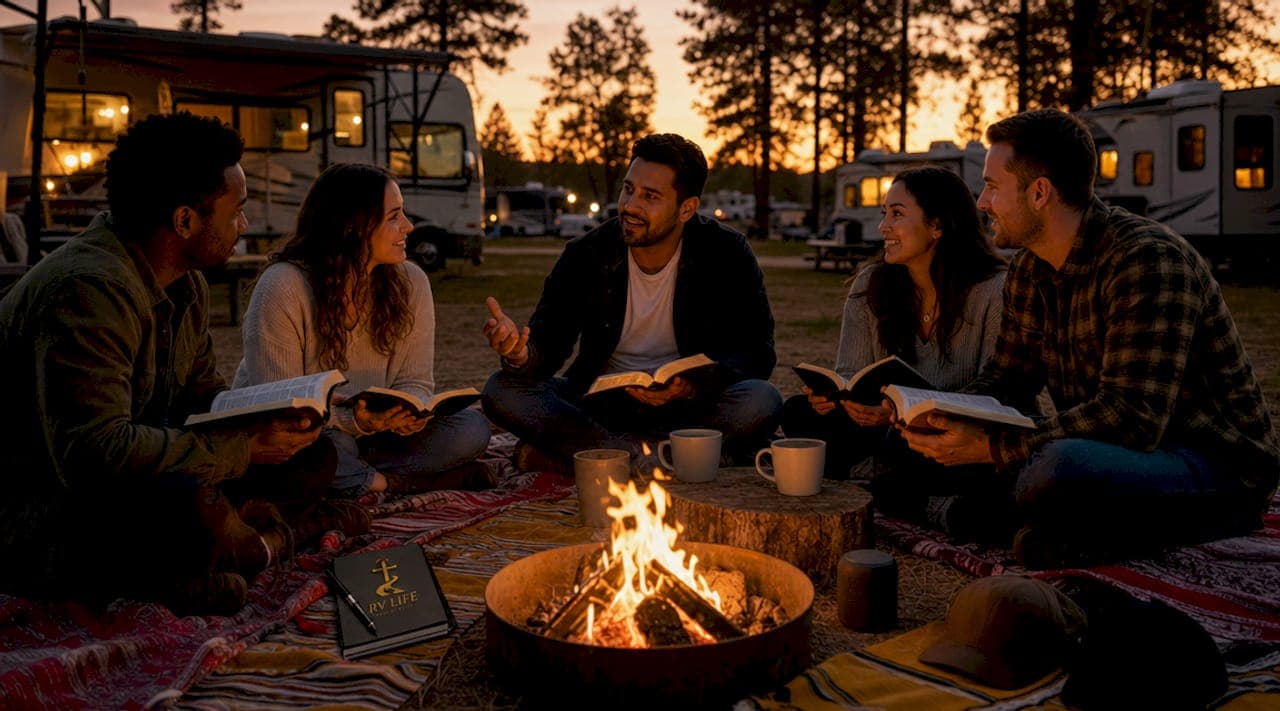
Christian community on the road is defined as biblical fellowship, known as koinonia, that unites traveling believers through shared worship, mutual care, and spiritual accountability regardless of location. For RV owners, truckers, and anyone living a mobile lifestyle, this kind of fellowship is not optional. It is the difference between spiritual growth and slow drift. Why Christian community matters on the road comes down to one truth: faith was never designed to be practiced alone, and the road makes isolation a real and daily threat. Ministries like Truckstop Ministries, Village Missions, and RvLifeministries exist precisely because traveling Christians need more than a podcast and a prayer app.
Why Christian community matters on the road: the biblical foundation
The word koinonia appears 20 times in the New Testament, including Acts 2:42 and Philippians 2:1-2, describing a spiritual unity built on shared beliefs and shared behavior. That frequency is not coincidental. It signals that community is structural to Christian life, not supplemental. Biblical fellowship is about shared life in the Spirit, not just proximity or social friendliness, which explains why mobile believers often feel spiritual loss even when surrounded by people.
The early church model in Acts 2:42-47 gives the clearest picture of what this looks like in practice. Luke describes a community devoted to teaching, fellowship, breaking bread, and prayer, all done together and daily. This was not a weekly obligation. It was a rhythm of life built around shared dependence on God. For a traveling Christian, that rhythm is exactly what the road disrupts.
Philip Melanchthon, the 16th-century reformer who worked alongside Martin Luther, identified three essentials for genuine Christian fellowship: unity in core doctrine, liberty in secondary matters, and charity in all things. That framework still holds. It means road-based community does not require finding a congregation identical to your home church. It requires finding believers who share the same Spirit, the same Lord, and the same willingness to serve one another.
"Fellowship is not the icing on the cake of Christian life. It is the cake itself. Without it, faith becomes private, and private faith tends to shrink."
The practical implication for travelers is this: every stop is an opportunity to practice koinonia. You can learn more about our faith foundation and how it shapes community for mobile believers at RvLifeministries.
- Koinonia describes spiritual unity, not just social gathering
- Acts 2:42-47 establishes teaching, fellowship, meals, and prayer as the community pattern
- Melanchthon's framework: unity, liberty, and charity as fellowship essentials
- Biblical community transcends location and denominational preference
How Christian community practically supports travelers on the road
Road-based Christian community is not abstract theology. It shows up in converted tractor trailers, travel plaza chapels, and free laundry facilities. Truckstop Ministries operates converted tractor trailers as chapels at 77 locations nationwide, serving approximately 500 workers. That number represents a consistent worship infrastructure available to drivers whenever they stop, solving the single biggest obstacle traveling Christians face: finding church on the road.
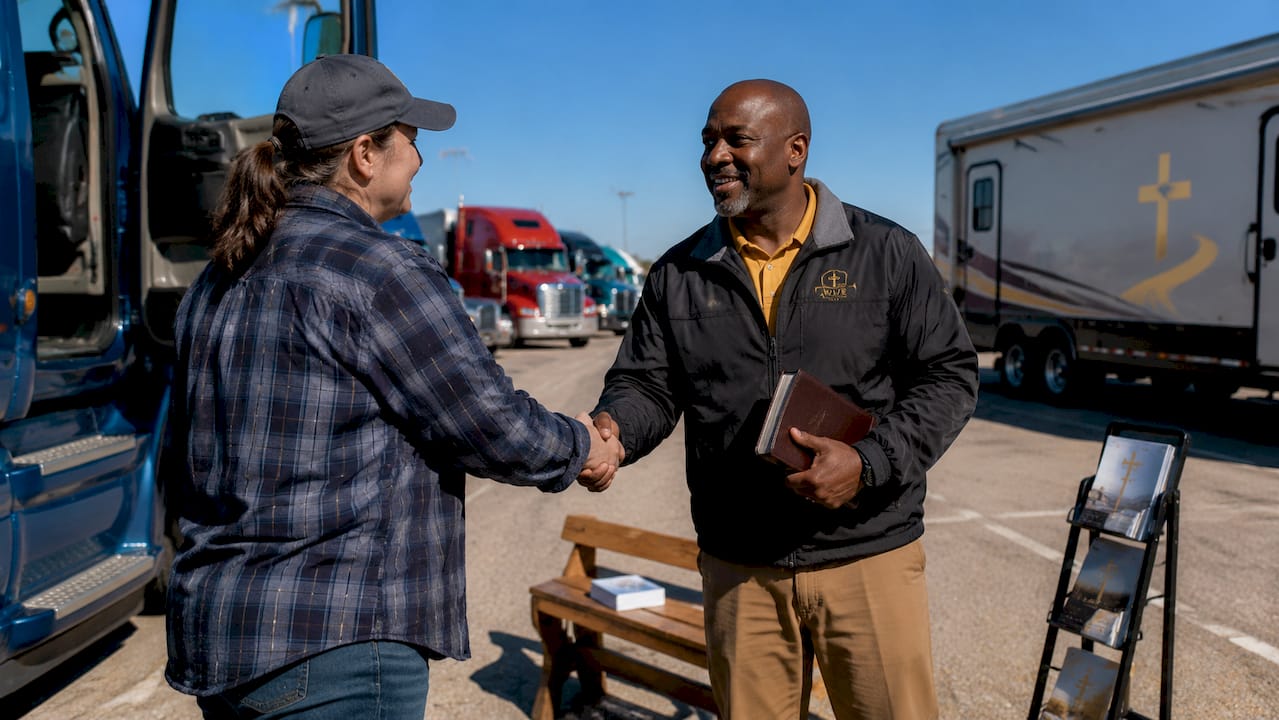
Village Missions runs the Breezewood Trucker Traveler Ministry, where Chaplain Bruce Maxwell has circulated at a Pennsylvania travel plaza since 1992, offering prayer, listening, food, hygiene kits, clothing, and temporary lodging. That kind of ministry has been running for over three decades, which tells you something important: the need never went away, and neither did the community that met it. Local churches fund and staff this effort, making it a model of how congregations can extend their reach to travelers without requiring those travelers to find them first.
The Association of Christian Truckers takes a different but equally practical approach. They provide free laundry, parking, snacks, and fellowship events including trucker jamborees with live music, teaching, and free meals. The stated goal is to make drivers feel better than when they arrived. That is a low-barrier, high-dignity model of community that does not require a theological conversation before offering a hot meal.
What these ministries share is a commitment to repeatable rhythms. A traveler passing through Breezewood, Pennsylvania, or stopping at one of Truckstop Ministries' 77 locations does not need to build community from scratch. They plug into something already running. That infrastructure concept is what makes road-based Christian community scalable and accessible for RV owners and truckers alike.
- Truckstop Ministries: 77 chapel locations, worship available at any stop
- Village Missions: crisis aid, prayer, food, lodging since 1992
- Association of Christian Truckers: free services and fellowship events at travel stops
Does traveling together actually strengthen Christian bonds?
Shared travel schedules enable natural conversations and reinforce group unity before a single worship song is sung. This is not a minor social benefit. Arriving somewhere together, navigating the same roads, and sharing the same delays creates a pre-event unity that separate arrivals cannot replicate. For RV caravans or church travel groups, this dynamic is a genuine community-building tool.
Travel also functions as embodied fellowship in a way that online connection cannot. Sitting around a campfire after a shared meal, praying together before a long drive, or worshipping in a converted trailer chapel at a truck stop are all expressions of the Acts 2:42-47 pattern. Online-only connections risk missing the table, prayer, and belonging pattern that sustains spiritual health over time. A Zoom call with your home church is better than nothing, but it does not replace the weight of someone sitting next to you.
The contrast matters especially for long-term travelers. RV owners who spend months on the road report that spiritual drift accelerates when community becomes entirely digital. The solution is not to stop traveling. It is to travel intentionally, building in stops at known fellowship hubs and planning shared travel with other believers when possible.
Pro Tip: If you travel with another RV or plan a route with a friend, coordinate your stops at campgrounds or travel plazas where Christian community events are scheduled. RvLifeministries maintains a calendar of events that makes this kind of intentional planning straightforward.
What does Christian community on the road actually look like?
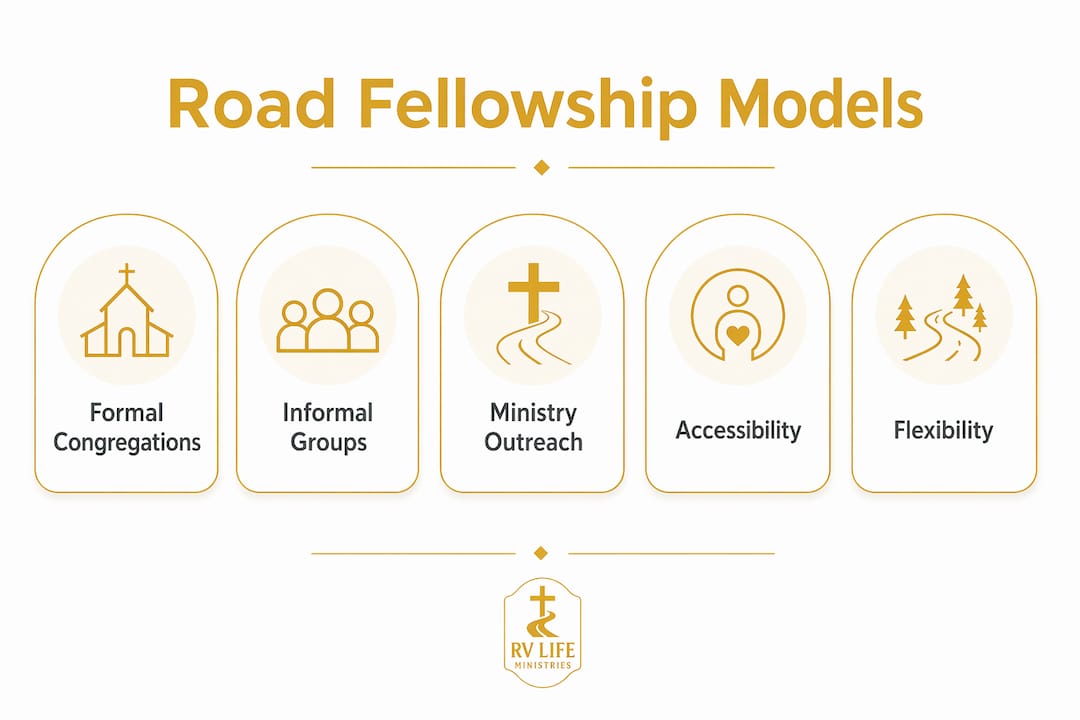
Road-based Christian fellowship takes three distinct forms, and understanding the differences helps travelers know what to look for and what to build.
| Model | Description | Best for |
|---|---|---|
| Formal congregations | Local churches near travel routes, partner church networks | Travelers staying in one area for a week or more |
| Informal small groups | Meal fellowships, campground Bible studies, chaplain visits | RV owners and campers seeking low-commitment connection |
| Ministry-driven outreach | Truckstop Ministries, Village Missions, Association of Christian Truckers | Truckers and travelers passing through quickly |
Formal congregations offer depth and doctrinal grounding, but they require time in one location. A partner church network, like the one RvLifeministries is building through its partner church program, solves this by creating a web of welcoming congregations that traveling believers can access along their routes.
Informal small groups are the most flexible model. A campground Bible study requires nothing more than a few believers, a shared text, and a willingness to show up. These gatherings often produce the most honest conversations precisely because there is no institutional pressure. Chaplain visits at travel plazas, like those run by Village Missions, fall into this category as well. They are low-barrier, high-impact, and available to anyone who stops.
Ministry-driven outreach is the most structured form and the most accessible for travelers who cannot plan ahead. Truckstop Ministries' chapel rigs are available whenever drivers stop by, requiring no appointment and no prior relationship. That accessibility is what makes them effective. The three models are not competing options. They complement each other, and the healthiest traveling Christians tend to draw from all three depending on where they are and how long they stay.
Key takeaways
Christian community on the road is not a luxury for traveling believers. It is the biblical pattern of koinonia made mobile, and it requires intentional pursuit through formal, informal, and ministry-driven fellowship.
| Point | Details |
|---|---|
| Koinonia is structural, not optional | Biblical fellowship appears 20 times in the New Testament, signaling community as core to Christian life. |
| Road ministries provide plug-in infrastructure | Truckstop Ministries, Village Missions, and Association of Christian Truckers offer ready-made fellowship at travel stops. |
| Embodied fellowship outperforms digital connection | Shared meals, prayer, and worship sustain spiritual health in ways online-only community cannot replicate. |
| Three models cover every traveler's needs | Formal churches, informal small groups, and ministry outreach complement each other for mobile believers. |
| Intentional travel planning builds community | Coordinating stops at fellowship hubs and traveling with other believers prevents spiritual isolation on long trips. |
What I've learned watching road-based community up close
Most people underestimate how fast spiritual drift happens on the road. You leave your home church, your small group, your Sunday routine, and within three weeks the Bible is still in the bag and the last prayer was at a rest stop in Ohio. I have seen this pattern repeat with RV owners who had every intention of staying connected. Intention is not enough without structure.
What actually works is treating fellowship like a route waypoint, not an afterthought. The travelers I have seen thrive spiritually are the ones who plan their stops around community, not just campgrounds. They know which travel plazas have chaplain services. They travel in loose caravans with other believers. They show up at trucker jamborees not because they are truckers but because the worship is real and the welcome is genuine.
The other thing I would push back on is the idea that road-based community is somehow lesser than home church community. In my experience, the fellowship you find at a Truckstop Ministries chapel or a Village Missions travel plaza is often more raw and more honest than what happens in a comfortable suburban sanctuary. People on the road are not performing. They are tired, sometimes lonely, and genuinely grateful for someone who shows up. That is exactly the soil where koinonia grows.
If you are an RV owner reading this, the question is not whether Christian community matters on the road. It clearly does. The question is whether you are building it into your travel life with the same seriousness you give to route planning and campground reservations.
— Bo
How RvLifeministries supports your road fellowship
RvLifeministries brings gospel-centered services directly to RV parks across America, making it one of the most accessible points of entry for traveling Christians seeking real community. Whether you are looking for worship while on the road or want to connect with a network of like-minded believers, the ministry has built tools specifically for mobile lifestyles.
The church livestream keeps you connected to worship no matter where your route takes you, and the partner church network means a welcoming congregation is rarely far from your next stop. If you want to go further, consider becoming an ambassador and helping extend that community to other travelers you meet along the way. Visit RvLifeministries to explore every resource available for your road journey.
FAQ
What is koinonia and why does it matter for travelers?
Koinonia is the Greek New Testament word for Christian fellowship, describing shared life in the Spirit rather than casual social contact. For travelers, it defines the kind of community that sustains spiritual health across changing locations.
How do I find Christian community at truck stops or campgrounds?
Truckstop Ministries operates chapel rigs at 77 locations nationwide, and Village Missions runs chaplain-staffed travel plaza ministries offering prayer, food, and fellowship. Searching for these stops along your route is the most direct way to find road-based community.
Is online fellowship enough for traveling Christians?
Online connection supports community but does not replace embodied fellowship. The Acts 2:42-47 pattern of shared meals, prayer, and worship together is what sustains long-term spiritual health, and that requires in-person gathering when possible.
What does RvLifeministries offer for traveling believers?
RvLifeministries provides gospel-centered services and activities at RV parks across America, including a church livestream, a partner church network, and ambassador opportunities for travelers who want to build community on the road.
How can I build Christian community if I travel full-time?
Plan stops at known fellowship hubs like Truckstop Ministries locations or Village Missions travel plazas, travel in coordination with other believing RV owners when possible, and use resources like RvLifeministries' calendar of events to find scheduled gatherings along your route.