
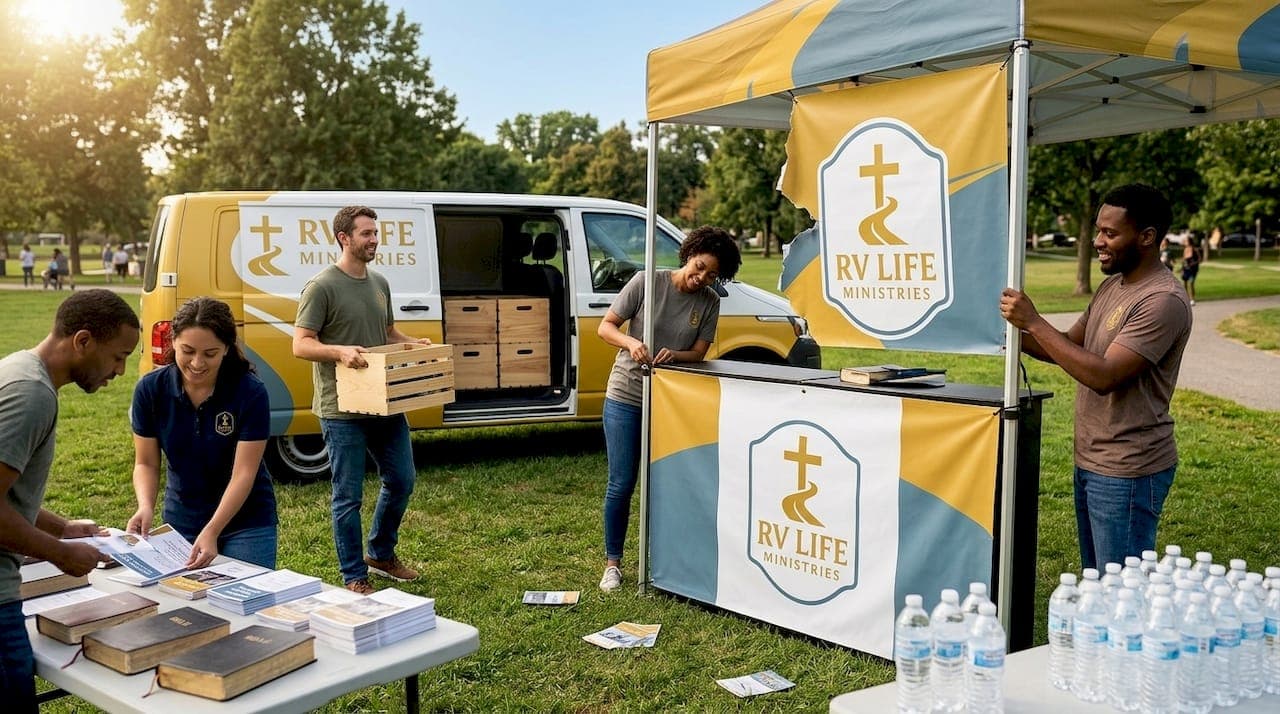
Traveling ministry activities are organized outreach efforts where Christians bring gospel-centered service, evangelism, and practical care directly to communities they encounter on the road. From tent revivals drawing hundreds of baptisms in a single weekend to a single evangelist handing out handmade crosses at roadside stops, the range of what counts as effective mobile ministry is wider than most church groups realize. Rvlifeministries sees this firsthand across RV parks throughout America, where traveling Christians regularly ask the same question: what does meaningful ministry on the road actually look like?
1. Examples of traveling ministry activities that define the field
The strongest examples of traveling ministry activities share one trait: they meet people where they are, physically and spiritually. They do not require a permanent building, a large staff, or a fixed congregation. What they require is intentionality, preparation, and a willingness to serve communities you may only visit once. The activities covered below represent real, documented ministry models from 2026, each with a distinct approach and a measurable impact.
2. Traveling tent revivals: city-by-city gospel outreach
Tent revivals are one of the most recognized forms of traveling ministry, and the Jesus Tent Revival demonstrates exactly why this model still works. The operation moves city to city, setting up large tents for multi-night gospel events that include worship, preaching, altar calls, and baptisms. The scale of baptisms is striking: over 300 people baptized in single weekends, with nationwide tours partnering with hosting churches for follow-up. That number matters because it shows tent revivals are not nostalgia. They produce real, trackable decisions for faith.
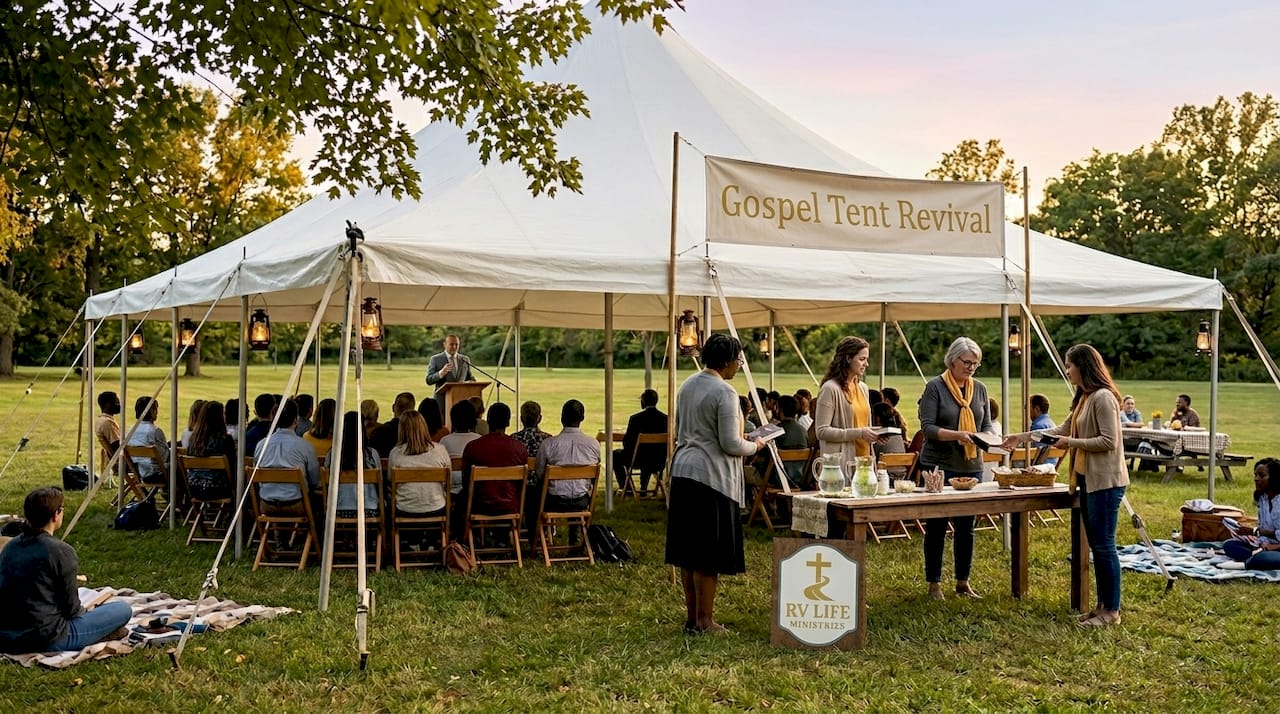
The logistics behind this model are more demanding than they appear. Baptism lines start before services even begin, which means water supply, staffing, and crowd flow must be planned well in advance. The tent itself is only the front door. The real work happens when local partner churches receive new believers and continue discipleship after the revival team moves on.
Pro Tip: If your church group wants to launch a traveling revival, secure your local church partnerships before you book a single venue. Follow-up discipleship is what converts a weekend event into lasting spiritual fruit.
Key features of the tent revival model include:
- Multi-night format with worship, preaching, and public response
- Dedicated baptism teams with water and staffing logistics
- Pre-arranged partnerships with local churches for post-event follow-up
- City-by-city tour structure that builds regional momentum
3. Roadside evangelism with free item giveaways
Mobile roadside evangelism is one of the most accessible travel ministry ideas for individual Christians and small groups. Evangelist Leo Lytle built a trailer stocked with 2,000 handmade crosses and drove it across America, generating over 6,000 gospel conversations without knocking on a single door. That figure reframes what one person with a vehicle and a clear message can accomplish.
The method works because it is invitation-based. People approach the trailer because they see the crosses and are curious. Nobody is cornered. The average conversation runs about four minutes, using a gentle, consistent script that volunteers can learn quickly and repeat without losing coherence. Short, repeatable messaging is not a compromise. It is the mechanism that keeps outreach volunteers effective across dozens of interactions per day.
"Mobile evangelism benefits from non-intrusive, invitation-based approaches that respect people's choice to engage on their own terms."
For church groups adapting this model, the setup is straightforward. A table, a visible giveaway item, a consistent message, and a public location are all you need. RV parks, state fairgrounds, truck stops, and community events are all viable venues. The cross is a natural conversation starter, but the same principle applies to water bottles, care packages, or any item with clear gospel messaging attached.
4. Mobile retreats that blend fellowship, activities, and Scripture
Mobile retreats represent a different category of ministry outreach activities. Rather than a single event, they are multi-day experiences that weave travel, outdoor activity, devotional time, and Scripture study into one continuous program. Lightrider Ministries runs this model with tours that include cycling, cooking, climbing, and Bible study across multiple U.S. cities and denominations. The Lightrider approach demonstrates that physical activity is not a distraction from ministry. It is a platform for it.
The multi-denominational structure is worth noting. When participants from Baptist, Methodist, and non-denominational backgrounds share a campfire and a devotional, the shared experience builds unity that a Sunday service rarely achieves. Staff benefit as much as participants, because sustained travel ministry builds resilience, adaptability, and relational depth in ministry leaders.
Pro Tip: When planning a mobile retreat, schedule devotional time immediately after a shared physical challenge. The combination of physical effort and spiritual reflection creates conditions for unusually honest conversation.
A basic mobile retreat framework includes:
- Choose a route with 3 to 5 stops that each offer a distinct activity or service opportunity
- Assign a devotional theme that connects across all stops
- Partner with at least one local church or ministry at each location
- Build in unstructured fellowship time each evening
- Close the retreat with a group reflection and commitment exercise
5. Combining spiritual outreach with humanitarian missions
Some of the most effective ministry programs on record combine evangelism with direct humanitarian service. The EYN National Choir's 2026 outreach to Borno communities is a documented example. In three days, the team cared for 142 patients and prayed with 297 people, running medical and spiritual outreach streams simultaneously. That dual-track model reaches people who might not respond to evangelism alone but will engage when physical needs are also being addressed.
The operational challenge is real. Dual-task timelines require careful scheduling, clear role definition, and coordination with local clinical teams to prevent either stream from undermining the other. A medical volunteer who is also expected to lead gospel conversations will do neither well without a clear structure.
| Activity type | Outcome from EYN 2026 outreach |
|---|---|
| Medical consultations | 142 patients served in three days |
| Prayer and gospel outreach | 297 people prayed with directly |
| Relief item distribution | Coordinated alongside medical and spiritual teams |
| Local community engagement | Borno communities reached in underserved areas |
The table above shows what a well-coordinated short-term ministry project can accomplish when both streams are planned with equal rigor. Churches considering this model should recruit medical volunteers separately from evangelism volunteers and assign a coordinator to manage the schedule for each track.
6. Planning tips for safe and effective traveling ministry trips
Good intentions do not replace good planning. The International Mission Board requires Safe Travel Training and volunteer compliance before any mission trip, and Ministry Travel recommends 10 to 12 months of preparation time with at least four pre-trip meetings. Those timelines exist because the most common mission trip failures are logistical, not spiritual.
Partnering with local leaders prevents the single most damaging pattern in short-term ministry: visitor dominance, where outside teams unintentionally sideline local capacity and create dependency rather than growth. The goal of any traveling ministry is to leave a community stronger than you found it.
Practical planning steps every church group should follow:
- Begin planning 10 to 12 months before departure, especially for international trips
- Complete all compliance requirements including child safety training and background checks
- Budget for airfare, program fees, visas, vaccinations, and travel insurance
- Hold at least four pre-trip meetings covering spiritual preparation, cultural orientation, and safety protocols
- Identify and contact local ministry partners before finalizing your itinerary
- Assign clear roles for every team member, including a designated safety coordinator
Pro Tip: Contact your partner church network before finalizing any travel route. Local church leaders know their communities in ways no outside team can replicate in a short visit.
Key takeaways
Traveling ministry activities produce lasting impact when outreach tools, local partnerships, and thorough preparation work together as a single system.
| Point | Details |
|---|---|
| Tent revivals require local follow-up | Secure church partnerships before booking venues to sustain new believers after the team leaves. |
| Roadside evangelism scales with simplicity | A consistent four-minute script and a visible giveaway item can generate thousands of gospel conversations. |
| Mobile retreats build unity across denominations | Shared physical activity and devotional time create deeper fellowship than traditional church events. |
| Humanitarian and spiritual streams need separate coordinators | Dual-track missions serve more people when medical and evangelism roles are clearly defined. |
| Planning timelines protect ministry quality | IMB and Ministry Travel both recommend 10 to 12 months of preparation for effective, safe trips. |
What I have learned from years of road-based ministry
The most common mistake I see traveling ministry teams make is treating the trip itself as the ministry. The trip is the vehicle. The ministry happens in the relationships you build before you arrive, during the conversations you have on the ground, and in the follow-up you commit to after you leave. Leo Lytle's cross ministry works not because the crosses are clever, but because he shows up consistently, speaks plainly, and trusts the Holy Spirit to do the work a four-minute conversation cannot.
What surprises most church groups is how much the mobile retreat model changes their own team. I have watched people who struggled to open up in a Sunday school class have genuinely transformative conversations around a campfire after a long day of cycling. The shared challenge strips away the social armor that makes honest faith conversation hard in a familiar setting.
My strongest recommendation is this: do not launch a traveling ministry without a local partner already in place at your destination. The Jesus Tent Revival's baptism numbers are impressive, but what makes them meaningful is the network of hosting churches ready to receive those new believers. Visible outreach without structured follow-up is a leaking bucket. Pair the two, and you build something that lasts well beyond your visit.
— Bo
How Rvlifeministries supports your traveling ministry
Rvlifeministries brings gospel-centered services and outreach activities directly to RV parks across America, and the resources available through the ministry are built specifically for Christians who want to serve communities while on the road.
Whether you are looking for ministry products and tools to equip your outreach, or you want to explore how to become an ambassador and carry the ministry forward in your own travels, Rvlifeministries has a clear path for you. The ministry also connects traveling Christians with a calendar of upcoming events so you can join or support outreach already happening near your route. If you want to go further, consider how your church can partner with local RV parks to create consistent ministry touchpoints across the country.
FAQ
What counts as a traveling ministry activity?
A traveling ministry activity is any organized gospel-centered outreach carried out while moving between locations, including tent revivals, roadside evangelism, mobile retreats, and humanitarian missions. The defining feature is that the ministry travels to the community rather than waiting for the community to come to a fixed location.
How many people can a traveling tent revival reach?
Tent revivals like the Jesus Tent Revival have recorded over 300 baptisms in a single weekend. Reach depends on venue size, local church partnerships, and the number of cities included in the tour.
How long should you plan before a mission trip?
Ministry Travel and the IMB both recommend 10 to 12 months of preparation time, including at least four pre-trip meetings and completion of all safety and compliance training before departure.
Can one person run a traveling ministry?
Yes. Leo Lytle's roadside cross ministry demonstrates that one person with a trailer and a consistent message can generate thousands of gospel conversations across America. Solo traveling ministry works best with a simple, repeatable outreach format and a clear safety plan.
How do you combine medical and spiritual outreach on a mission trip?
Assign separate coordinators for each stream and build a shared daily schedule that allows both teams to operate without overlap. The EYN National Choir's 2026 outreach served 142 patients and prayed with 297 people in three days by treating medical and spiritual logistics as parallel, equally planned operations.