
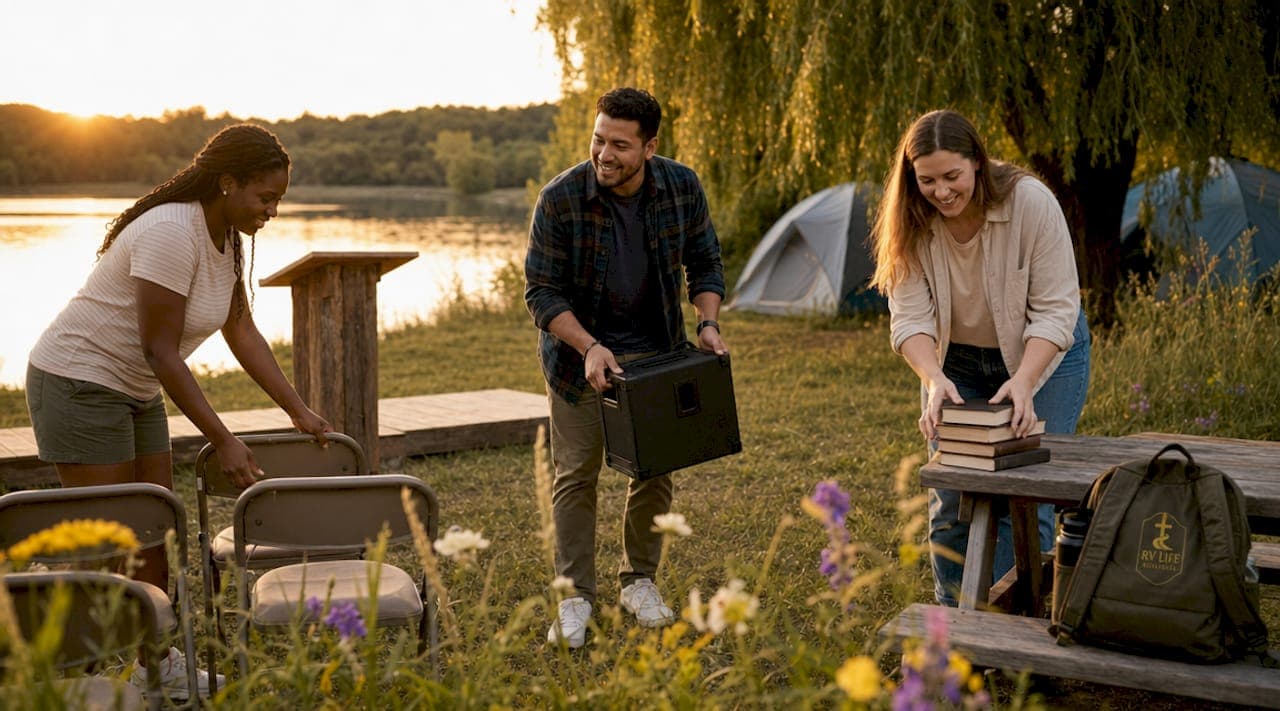
A gospel outreach campground is a structured ministry operation that combines outdoor community settings with intentional evangelism to produce lasting spiritual transformation. Church leaders who run gospel outreach campground programs report stronger community bonds, higher volunteer retention, and more consistent faith decisions than single-event crusades. This guide covers the four pillars every organizer must address: spiritual programming, safety and legal compliance, insurance, and community engagement. Whether you are launching your first faith-based camp or scaling an existing retreat, these frameworks apply directly to your context.
What are essential program elements for a gospel outreach campground?
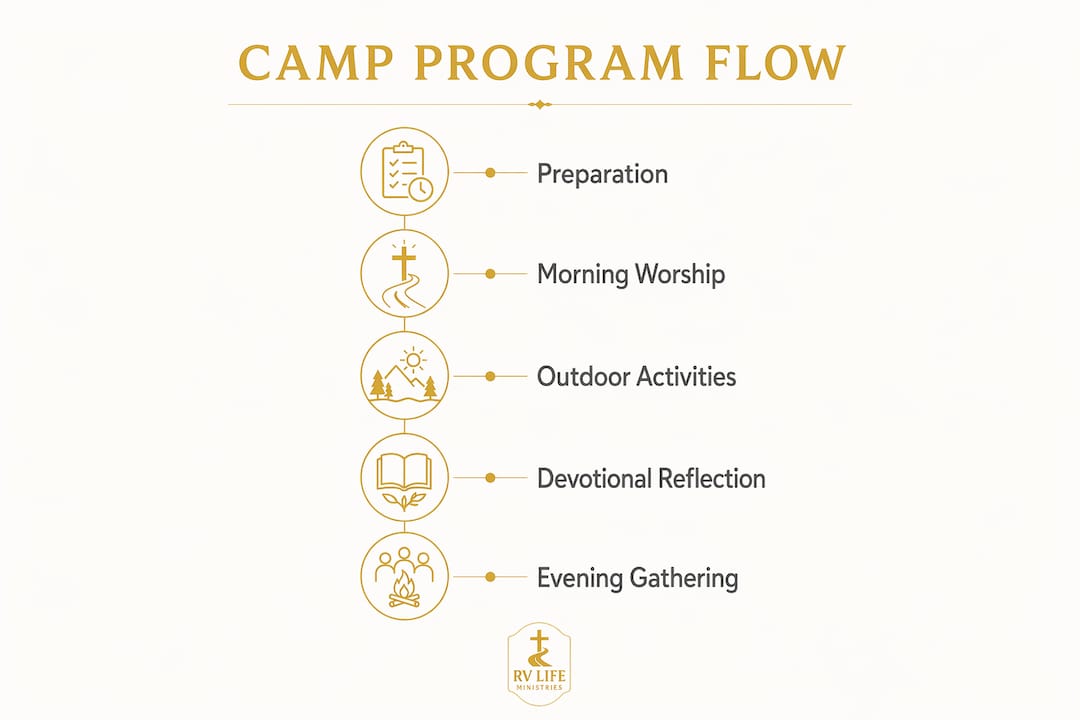
Spiritual growth at camp does not happen by accident. Camp Eagle's group camp model demonstrates that a structured daily schedule integrating worship, teaching, activity rotations, and evening scripture debriefs produces measurable spiritual engagement. That structure gives campers a rhythm they can follow and gives your team clear accountability at every hour of the day.
Build your schedule around four anchors: morning worship, midday relational activities, communal meals, and evening devotional reflection. Each anchor serves a different purpose. Morning worship sets the spiritual tone. Midday activities build the relational trust that makes evening conversations possible. Communal meals are where the real gospel sharing happens, naturally and without pressure. Evening debriefs close the loop on what God did during the day.
- Open with worship, not announcements. The first 20 minutes of each day shape the entire emotional and spiritual atmosphere.
- Schedule short, focused messages. Talks under 25 minutes hold attention and leave room for questions and conversation.
- Build in unstructured relational time. Free time around campfires is not wasted time. Campfire conversations and shared meals create ambient gospel witness without requiring extreme activities or expensive gear.
- End each day with a group debrief. Ask two questions: What did you notice today? What are you still thinking about?
- Repeat the rhythm daily. Consistency across three to five days compounds spiritual impact in ways a single Sunday service cannot.
Pro Tip: Embed devotional content into activity transitions, not just formal sessions. A two-minute reflection before a hike or after a meal keeps the gospel present throughout the day without making campers feel lectured.
How to ensure safety, legal compliance, and licensing for camp operations
Safety compliance is not optional. It is required to protect campers and maintain your operational license. After the Camp Mystic tragedy in Texas, new state regulations now require written emergency action plans, weather warning systems, and documented coordination with local emergency services before license renewals are approved. Episcopal camps across Texas faced operational uncertainty in 2026 because they had not anticipated these requirements. Your camp cannot afford that surprise.
The American Camp Association provides the most widely recognized safety framework for faith-based camps. The ACA safety framework covers eight core operational areas, including site safety, health services, aquatic supervision, transportation, and emergency response. Aligning your operations with ACA standards gives you a defensible compliance baseline and signals credibility to parents, insurers, and local authorities.
Key compliance actions every camp operator must complete:
- Write a site-specific emergency action plan and review it annually with your full leadership team.
- Conduct documented drills for fire, severe weather, and medical emergencies before each camp season.
- Coordinate directly with local fire departments, EMS, and law enforcement. They need to know your site layout.
- Train all staff on child protection policies, including mandatory reporting obligations.
- Verify that every activity, from waterfront use to ropes courses, has a designated trained supervisor.
"Treat your gospel outreach campground as a regulated youth camp operation, not an informal retreat. That mindset shift alone will protect your ministry from the compliance gaps that shut programs down." — Kearnan Consulting Group
Pro Tip: File your emergency action plan with your county emergency management office. This one step builds a formal relationship with local responders and can reduce your insurance premiums.
What insurance coverages are critical for gospel outreach campgrounds?
Standard church general liability policies do not cover camp-specific risks. MinistrySure's specialized camp policies identify the coverages that faith-based camp operators consistently overlook, including participant accident coverage, abuse and molestation liability, directors and officers protection, workers' compensation for seasonal staff, and aquatic liability. Each of these fills a gap that a general church policy leaves open.
The table below maps common camp activities to the insurance coverage each one requires.
| Camp activity | Required coverage |
|---|---|
| Swimming, canoeing, kayaking | Aquatic liability endorsement |
| Ropes courses, zip lines | Adventure activity rider |
| Overnight youth supervision | Abuse and molestation liability |
| Seasonal and volunteer staff | Workers' compensation |
| Board and leadership decisions | Directors and officers protection |
| General participant injuries | Participant accident coverage |
One detail that catches many camp operators off guard: insurance carriers often exclude waterfront and adventure activities unless you secure proper endorsements before finalizing your program. Swapping in a new activity after your policy is written creates a coverage gap. Lock in your activity list first, then finalize your insurance. This sequence matters more than most ministry leaders realize.
Pro Tip: Request a certificate of insurance from every vendor, contractor, and activity provider you bring onto your campground. Their coverage must name your ministry as an additional insured.
How to engage your church and local community effectively through camp outreach?
Effective gospel outreach in campgrounds explained simply comes down to one principle: people trust people before they trust messages. The benefits of gospel sharing at campgrounds are highest when your team prioritizes relationship over program. A camper who shares three meals with a believer is far more open to a gospel conversation than one who sits through three presentations.
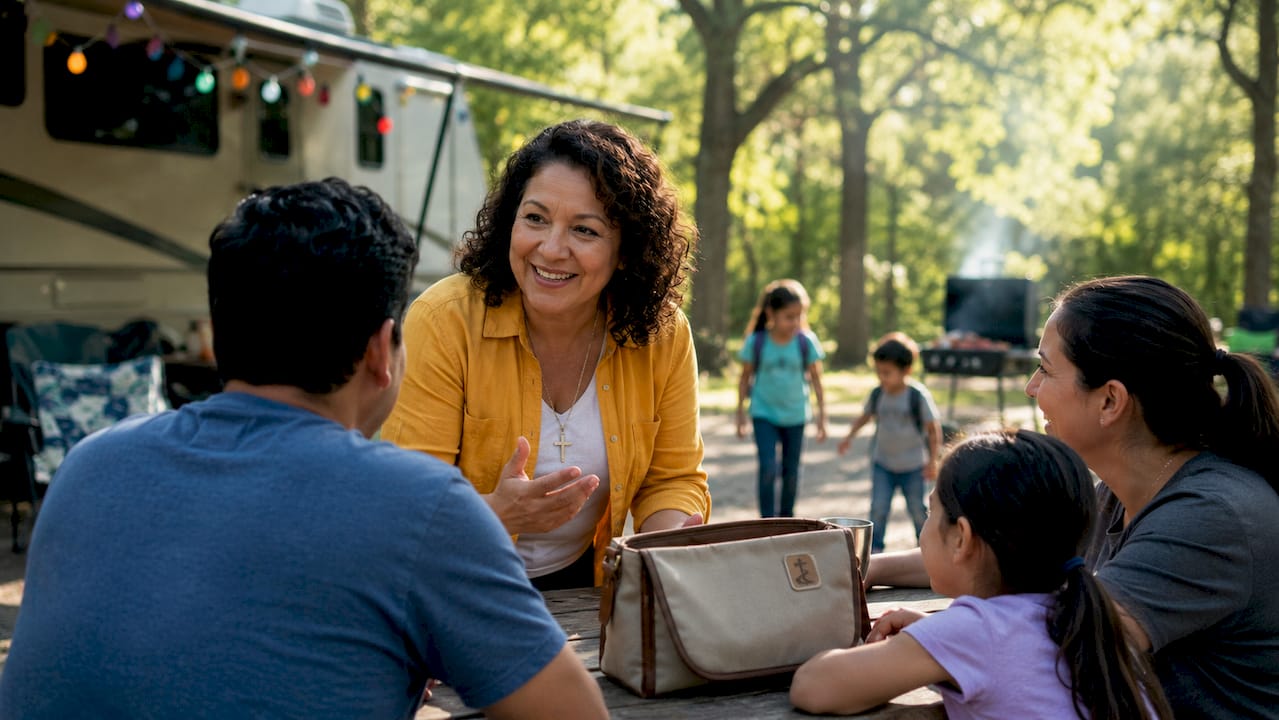
Outdoor ministry works best in simple, accessible formats that nurture community and spiritual curiosity without requiring high physical demands. Fresh Expressions research confirms that campfire gatherings and shared outdoor meals lower social barriers in ways that formal church settings rarely achieve. This is why evangelism works naturally at campgrounds. The environment itself does part of the work.
Practical engagement strategies that produce results:
- Map your local community before camp starts. Identify neighbors, seasonal RV residents, and local families who are not connected to a church. Invite them specifically, not generically.
- Partner with local churches. Cooperation multiplies reach. A church three miles from your campground may have relationships with families you cannot access on your own.
- Create a welcoming entry experience. The first 15 minutes on site set the relational tone for the entire camp. Assign your warmest volunteers to arrival.
- Use shared meals as ministry moments. Seat believers and seekers together intentionally. Train your team on natural conversation starters that open faith dialogue without pressure.
- Follow up within 48 hours. The spiritual openness created at camp fades quickly without a personal follow-up call or visit from someone the camper connected with.
You can explore church events that build connection for additional frameworks on designing faith-building community experiences that complement your camp programming.
What operational models support scalable gospel outreach campgrounds?
The difference between a camp that runs once and one that runs every year is operational infrastructure. Camp Eagle's group camp template demonstrates how hosted meals, pre-set activity rotations, and customizable programming blocks allow ministry teams to focus on spiritual leadership rather than logistics. When your team is not scrambling to solve catering problems, they are available for the conversations that matter.
The two primary models for gospel outreach campground operations are overnight camps and day camps. Each has distinct advantages depending on your budget, volunteer capacity, and target audience.
| Model | Duration | Best for | Key requirement |
|---|---|---|---|
| Overnight camp | 3 to 7 nights | Youth groups, church retreats | Sleeping facilities, overnight supervision |
| Day camp | 1 to 5 days | Families, community outreach | Transportation coordination, parent communication |
| Weekend retreat | 2 nights | Adults, young adults | Minimal staffing, focused programming |
| RV park outreach | Ongoing | Traveling families, RV communities | Mobile team, flexible scheduling |
Volunteer recruitment and role delegation determine whether your model scales. Assign a logistics coordinator, a spiritual programming lead, a safety officer, and a hospitality team lead as your four core roles. Every other volunteer reports to one of these four. This structure prevents the leadership confusion that collapses many well-intentioned camp programs after their first season.
Becoming a ministry ambassador through Rvlifeministries gives your volunteer leaders a formal pathway for training and deployment that supports exactly this kind of role-based structure.
Key takeaways
Running a gospel outreach campground requires integrating spiritual programming, safety compliance, proper insurance, and relational community engagement into one coordinated operation.
| Point | Details |
|---|---|
| Structure daily programming | Use morning worship, communal meals, and evening debriefs as the daily rhythm anchor. |
| Treat camp as regulated ministry | Meet ACA standards and state licensing requirements before your first camper arrives. |
| Secure camp-specific insurance | Get aquatic, abuse, and adventure activity coverage before finalizing your program list. |
| Prioritize relational outreach | Shared meals and campfire conversations produce more gospel openness than formal presentations. |
| Delegate with four core roles | Assign logistics, programming, safety, and hospitality leads to build a scalable operation. |
What I've learned running gospel campground ministry
The most common mistake I see church leaders make when they host gospel events at an RV park or campground is treating safety and legal compliance as administrative obstacles rather than ministry foundations. You cannot share the gospel effectively if your camp is shut down mid-season because your emergency plan was never filed, or if a liability claim drains the resources your ministry spent years building.
Ambient evangelism, the kind that happens over a campfire or at a shared dinner table, consistently produces deeper and more durable faith responses than high-pressure altar calls. I have watched skeptical campers who resisted every formal session open up completely during a late-night campfire conversation. The outdoor setting removes the social armor people wear in church buildings. That is not a coincidence. It is a ministry asset you should design around deliberately.
Partnering with local churches is not a nice-to-have. It is the difference between a camp that makes a one-week impact and one that produces year-round discipleship. The relationships your camp starts need a local church home to grow in. Build those partnerships before camp, not after.
Evaluate every camp season with honest metrics: How many first-time gospel conversations happened? How many campers connected with a local church afterward? What safety incidents occurred and what do they reveal about your procedures? Continual evaluation is what separates ministries that grow from ones that plateau.
— Bo
How Rvlifeministries supports your gospel campground outreach
Rvlifeministries brings gospel-centered services and activities directly to RV parks across America, and that same infrastructure supports church leaders building campground outreach programs from the ground up.
Whether you need ministry resources and partnership to launch your first camp season, want to extend your reach through church livestream tools that keep campers connected after they leave, or are ready to become a partner church to access training and operational support, Rvlifeministries has a pathway for your team. Gospel outreach programs work best when ministry leaders are not working alone. Explore how Rvlifeministries can support your next camp season and connect your community to something that lasts.
FAQ
What does it mean to run a gospel outreach campground?
Running a gospel outreach campground means operating a structured outdoor ministry program that combines intentional evangelism with community-building activities, worship, and spiritual teaching. It requires planning across programming, safety compliance, insurance, and community engagement.
Why does evangelism work naturally at campgrounds?
Campgrounds lower social barriers through shared meals, campfire conversations, and outdoor settings that remove the formality of church buildings. Fresh Expressions research confirms that these simple, accessible formats produce genuine spiritual curiosity and openness.
What insurance does a gospel outreach campground need?
Beyond general church liability, camps need participant accident coverage, abuse and molestation liability, aquatic liability, adventure activity endorsements, and workers' compensation for seasonal staff. MinistrySure specializes in these camp-specific policies.
How do I meet safety and licensing requirements for a faith-based camp?
Follow the American Camp Association's eight-area safety framework, write a site-specific emergency action plan, conduct annual documented drills, and coordinate with local emergency services. In 2026, states like Texas now require these steps before issuing or renewing camp licenses.
What is the best operational model for a first-time gospel outreach camp?
A weekend retreat model with two nights, focused programming, and a small volunteer team is the most manageable starting point. It tests your logistics, safety procedures, and spiritual programming before you commit to a full week-long overnight camp.