
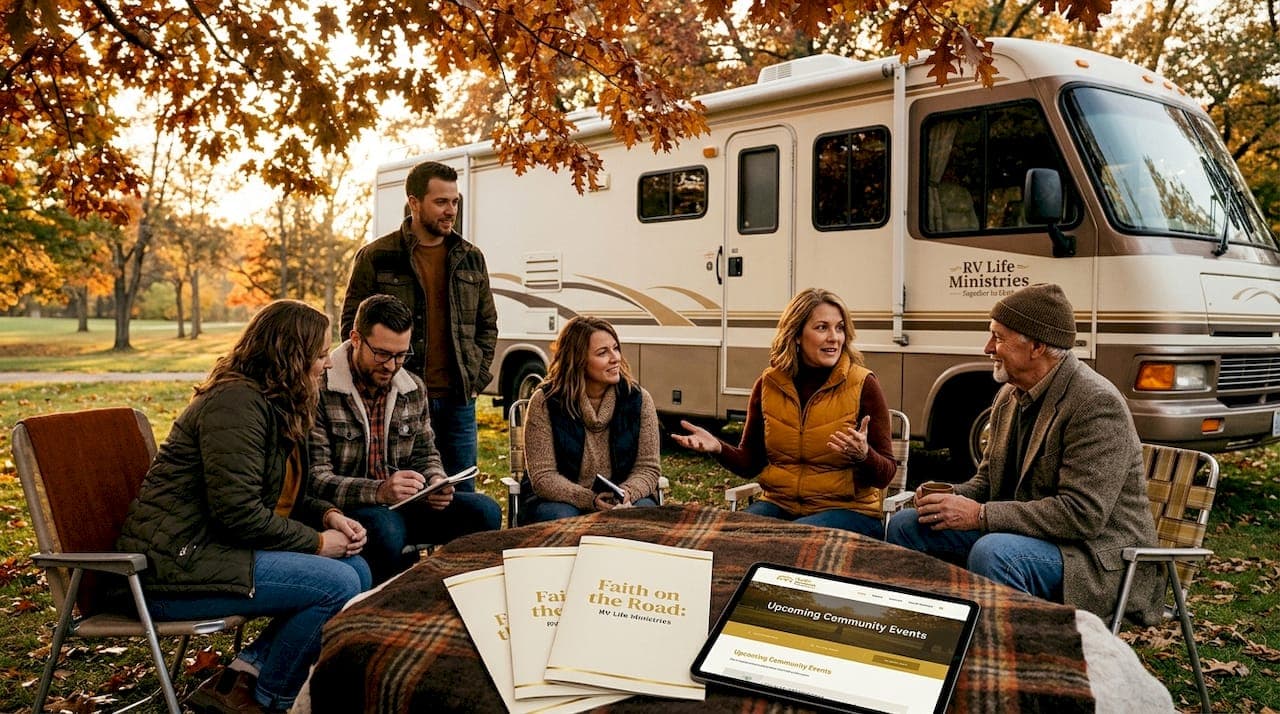
Partnering a church with an RV ministry is one of the most direct ways to extend gospel-centered outreach beyond your building and into communities that stationary programs never reach. Organizations like RV Life Ministries, NOMADS, and Blue Jay Ministries have proven that mobile ministry creates real, lasting impact when local churches provide the prayer, volunteers, and financial backbone that traveling teams need. The model works because it combines the relational depth of a local congregation with the geographic flexibility of a mobile outreach unit. Churches that commit to this kind of collaboration consistently report stronger community engagement and more diverse volunteer participation than traditional mission programs alone.
How to partner your church with an RV ministry
Before your church signs any partnership agreement, you need an honest assessment of what you bring to the table and what you expect in return. Churches that skip this step often find themselves overcommitted or misaligned with a ministry's actual needs. Start by mapping your congregation's volunteer skills, available budget, and outreach goals against what the RV ministry requires on the ground.
Due diligence on legal and financial standing is non-negotiable. Tax-exempt status verification is critical before your church commits any financial support, because contributions to ministries without 501(c)(3) status are not tax-deductible for your donors. Blue Jay Ministries, for example, openly discloses that its 501(c)(3) application is still pending, which means giving to them carries different reporting implications for your congregation. Knowing this upfront protects your church financially and keeps your donors informed.
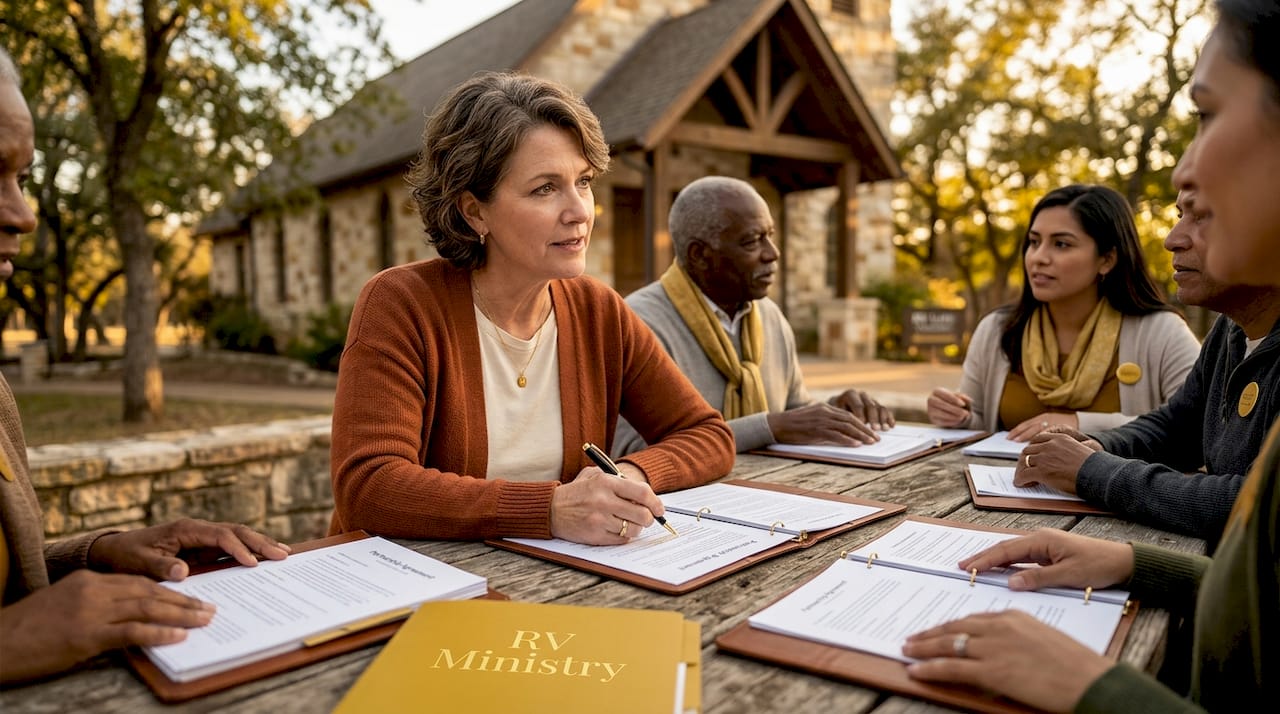
Here is a quick-reference table of what every church should confirm before formalizing any RV ministry collaboration:
| Prerequisite | Recommended tool or action |
|---|---|
| Volunteer skill inventory | Survey congregation using a skills assessment form |
| Ministry legal status | Request 501(c)(3) determination letter directly |
| Financial transparency | Review annual reports or IRS Form 990 filings |
| Communication infrastructure | Set up a dedicated email list or group messaging app |
| Prayer support structure | Assign a prayer team to the ministry partnership |
| Background check policy | Confirm ministry's screening requirements for volunteers |
Beyond paperwork, your church needs a communication channel dedicated to the partnership. A group messaging platform like GroupMe or a dedicated email list keeps volunteers informed, prayer teams updated, and leadership aligned without letting the partnership drift into silence between active service periods.
Steps to establish and sustain an RV ministry collaboration
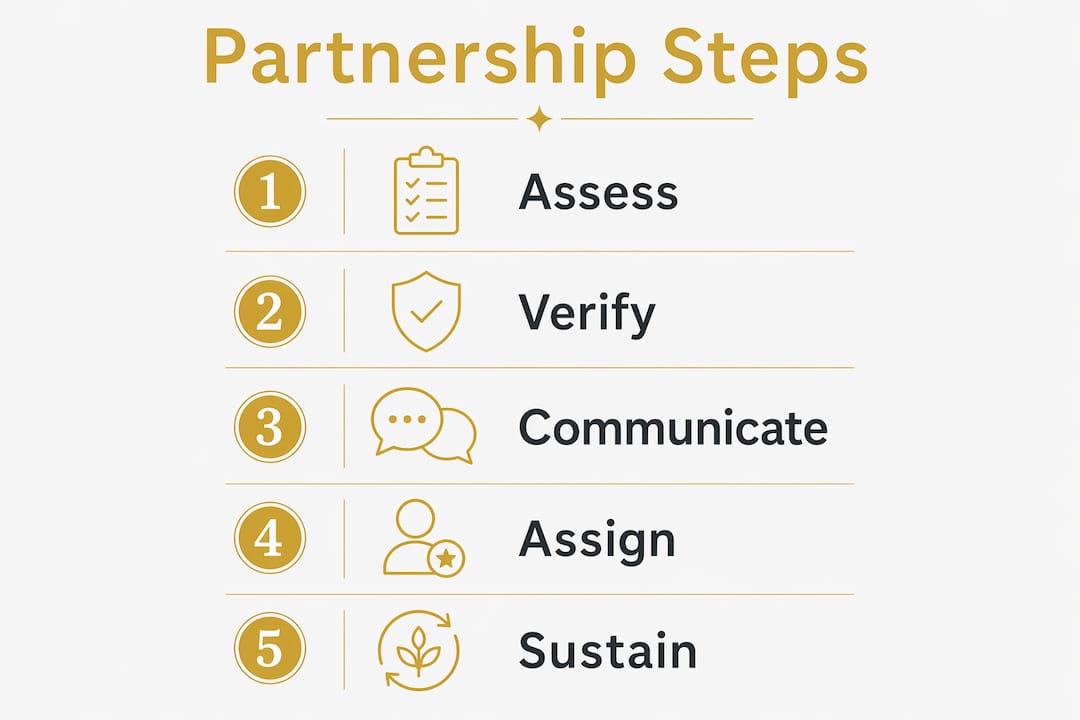
Once your church has completed its due diligence, the actual partnership-building process follows a clear sequence. Skipping steps here is the most common reason partnerships stall after an enthusiastic launch.
-
Make direct contact with ministry leadership. Reach out to the RV ministry's point of contact and schedule a call or video meeting. Ask specifically about their current needs, their geographic focus, and how they have worked with partner churches before. This conversation sets the tone for everything that follows.
-
Clarify your church's role in writing. Flexible partnership roles accommodate different church capacities, so decide early whether your primary contribution will be prayer support, financial giving, on-site volunteering, or a combination. A written role agreement prevents misunderstandings six months in.
-
Organize and train your volunteer team. NOMADS, the United Methodist RV mission volunteer ministry, requires that volunteer skill categories be discussed upfront and that team training is completed before deployment. Apply the same standard to your own volunteers. Match people to roles based on verified skills, not enthusiasm alone.
-
Run background checks before deployment. Any volunteer working with vulnerable populations, including children or elderly residents in RV parks, needs a background check. This protects the people you serve and shields your church from liability.
-
Plan your first joint outreach event together. Whether it is a repair project, a community meal, or a worship gathering at an RV park, the first shared event builds trust faster than any amount of planning calls. Keep the scope small and achievable so both teams finish with a win.
-
Build a regular communication rhythm. Monthly check-ins between your church's partnership coordinator and the RV ministry's leadership prevent the slow drift that kills most volunteer partnerships. Use these calls to share updates, adjust roles, and celebrate what God is doing.
Pro Tip: Assign one person in your congregation as the dedicated partnership liaison. This single point of contact eliminates confusion, speeds up decisions, and gives the RV ministry a reliable person to call when needs arise.
How to integrate practical service and spiritual care
The strongest RV ministry partnerships do not separate hands-on work from spiritual engagement. They treat both as equally important expressions of the same mission. NOMADS volunteers, for instance, handle construction and repair work including electrical, drywall, flooring, and maintenance, while simultaneously building relationships with the people they serve. The physical work opens doors that a sermon alone cannot.
Your church can structure its contribution around four integrated service categories:
- Practical repairs and maintenance: Send volunteers with verified trade skills to assist with projects the RV ministry has identified. Coordinate with the ministry on materials, tools, and safety requirements before arrival.
- Community meals and hospitality: Ridge Haven and other PCA-affiliated ministries pair community meals with holiday outreach, combining food service with relational ministry. Your church kitchen team can replicate this model at RV parks.
- Prayer and counseling ministry: Assign trained prayer ministers to be present during outreach events. Many RV park residents are traveling through difficult life seasons and respond deeply to personal prayer.
- Gift bags and welcome packages: Physical gifts like devotional books, hygiene items, or handwritten notes from your congregation communicate care in a tangible way that residents remember long after the team leaves.
"Relationship building through service lowers barriers and helps RV ministry volunteers integrate into local church outreach effectively." — NOMADS Mission Volunteers
Pinehaven Christian Ranch demonstrates what this integration looks like at scale. The ranch provides housing, meals, and RV parking for mission trip groups while coordinating service projects alongside local churches, community groups, and food pantries. Your church does not need a ranch to replicate the model. You need a clear plan that assigns every volunteer to both a practical task and a relational responsibility.
Common challenges in RV ministry partnerships and how to solve them
Every church-RV ministry partnership hits friction points. Knowing the most common ones in advance lets you address them before they become relationship-ending problems.
Volunteer turnover is the most frequent issue. RV ministry work attracts enthusiastic short-term volunteers who fade after the first trip. Counter this by building a tiered commitment structure: some volunteers commit to one trip per year, others to quarterly involvement, and a core team commits to the full partnership duration.
Scheduling conflicts between a mobile team's travel calendar and your church's program schedule require flexibility from both sides. Build a shared calendar at the start of the year and protect at least two joint service dates as non-negotiable.
Financial giving complications arise when a ministry's tax status is unclear. As noted earlier, giving limitations apply when a ministry lacks 501(c)(3) status. Communicate this clearly to your congregation so donors can make informed decisions. Some churches route support through a fiscal sponsor with established tax-exempt status while a ministry completes its application.
- Confirm tax status annually, not just at the start of the partnership.
- Document all financial contributions with receipts, regardless of deductibility.
- Set a realistic annual giving budget and review it at mid-year.
Mismatched expectations between your stationary church leadership and a mobile team often stem from one side assuming the other understands the constraints of their context. A traveling RV ministry cannot always hit fixed deadlines. Your church calendar cannot always flex around a ministry's travel route. Commitment to partnership consistency is vital for long-term impact, and that consistency requires both parties to communicate constraints early and often.
Pro Tip: Create a one-page partnership agreement that spells out roles, financial commitments, communication expectations, and a six-month review date. Both parties sign it. This single document resolves 80% of the disputes that derail new partnerships.
Key takeaways
Partnering a church with an RV ministry requires verified legal due diligence, clearly defined volunteer roles, and a consistent communication structure to produce lasting outreach impact.
| Point | Details |
|---|---|
| Verify legal and tax status | Confirm 501(c)(3) status before committing church funds to any RV ministry. |
| Define roles in writing | Specify whether your church contributes prayer, finances, volunteers, or all three before launching. |
| Train and screen volunteers | Match volunteers to verified skills and complete background checks before any deployment. |
| Integrate service and spiritual care | Pair practical tasks like repairs and meals with prayer ministry and relational engagement. |
| Build communication rhythms | Schedule monthly check-ins and a shared calendar to prevent partnership drift. |
What I've learned from watching church-RV partnerships succeed and fail
I have seen churches approach RV ministry partnerships with tremendous energy and then watch the whole thing quietly collapse within a year. The pattern is almost always the same. The launch is strong, the first trip is meaningful, and then nobody owns the follow-through.
The churches that sustain these partnerships treat the RV ministry as an extension of their own mission field, not a one-time service project. They assign a real person with real authority to manage the relationship. They budget for it annually. They pray for the ministry by name from the pulpit. That level of institutional commitment is what separates a partnership that lasts five years from one that lasts five months.
What surprises most church leaders is how much the RV ministry benefits from the church's stability. A traveling team needs a home base of prayer and financial support to keep moving. When your church provides that, you are not just helping them serve others. You are the infrastructure that makes their entire mission possible.
I also want to push back on the assumption that only large churches can do this well. Some of the most effective RV ministry partnerships I have seen involve congregations of under 200 people who commit deeply rather than broadly. They send two or three skilled volunteers instead of twenty unprepared ones. They give consistently instead of sporadically. That focused, faithful approach produces more fruit than a large church that treats the partnership as a line item on a mission committee agenda.
View this as a long-term relationship, not a program. The RV park residents your ministry serves will remember the church that kept showing up.
— Bo
Connect your church with RV Life Ministries
RV Life Ministries serves RV parks across America with gospel-centered activities and community outreach, and your church can be part of that mission right now.
Through the partner church program, your congregation gains access to ministry resources, training support, and a direct connection to traveling teams already serving in the field. Churches can also extend their reach through the church livestream program, bringing Sunday worship directly to RV park communities. If your church is ready to provide financial backing, the donate and sponsor page outlines exactly how your giving supports active outreach. Visit RV Life Ministries today and take the first step toward a partnership that moves the gospel forward.
FAQ
What does it mean to partner a church with an RV ministry?
A church-RV ministry partnership is a formal collaboration where a local congregation provides prayer, financial support, volunteers, or logistical resources to a traveling RV-based outreach team. The partnership extends the church's mission reach into RV parks and mobile communities that traditional programs do not serve.
Does the RV ministry need to be a 501(c)(3) for our church to partner with them?
Not necessarily, but your church needs to understand the financial implications. Contributions to ministries without 501(c)(3) status are not tax-deductible for donors, so your congregation must be informed before giving.
How do we find the right RV ministry to partner with?
Start by identifying ministries whose geographic focus and service model align with your church's outreach goals. Organizations like NOMADS, RV Life Ministries, and Pinehaven Christian Ranch each offer structured partnership models with clear roles and logistical support for partner churches.
What volunteer skills are most needed in RV ministry partnerships?
Construction and maintenance skills are consistently in demand, including electrical work, drywall, flooring, and general repairs. Relational and pastoral skills for prayer ministry and counseling are equally valued alongside the practical work.
How much financial commitment does a church-RV ministry partnership require?
Financial commitment varies widely depending on the ministry and your church's capacity. Some partnerships begin with a modest monthly giving commitment and grow over time. Reviewing the ministry's budget transparency and annual reports before committing helps your church set a realistic and sustainable giving level.