

A gospel-centered lifestyle is defined as a continuous daily way of living rooted in union with Christ, where your identity, choices, and actions flow from that relationship rather than from rule-following or religious performance. This is not a set of behaviors you layer onto your existing life. It is a total reorientation of who you are and why you do what you do. Understanding gospel living means recognizing that the gospel is not just the entry point to faith. It is the ongoing fuel for every ordinary moment, from how you treat a coworker to how you handle financial stress on the road.
What does a gospel centered lifestyle look like day to day?
Gospel-centered living is a continuous daily way of life focused on union with Christ, moving away from legalistic rule-following. That distinction matters more than most people realize. Legalism produces exhaustion. Union with Christ produces freedom.
Eight core practices define what living according to the gospel looks like in practice: prayer, rejoicing, evangelizing, Scripture study, service, instructing, nurturing, and giving. These are not items on a spiritual checklist. They are daily gospel rhythms that replace sporadic religious activity with a continuous, integrated way of being. Think of them the way you think about eating or sleeping. You do not eat once a week and expect to stay healthy. The same logic applies here.
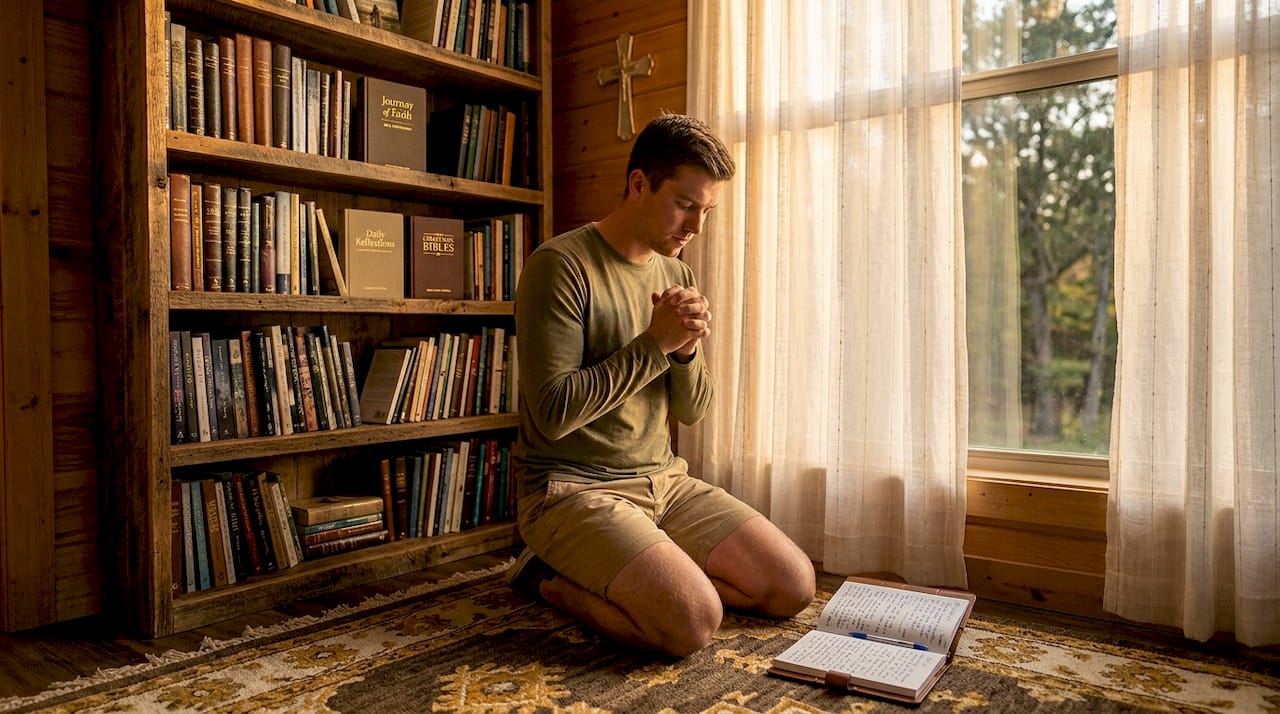
Most Christians struggle not because they lack knowledge but because they treat faith as a compartment. Sunday worship, occasional prayer, and annual mission trips do not add up to a gospel-centered life. They add up to a gospel-adjacent life. The difference is integration. Every area, including work, finances, relationships, and recreation, becomes a space where Christ is present and active.
Pro Tip: Focus on consistency and dependence rather than performance. One honest, quiet prayer at 6 a.m. does more for your spiritual formation than an impressive public display done out of habit.
Here is what these eight practices look like when they become a lifestyle rhythm rather than occasional tasks:
- Prayer: Daily conversation with God, not a formal recitation. This includes gratitude, confession, and intercession for specific people by name.
- Rejoicing: Choosing to acknowledge God's goodness even in hard circumstances, which reshapes your emotional default over time.
- Evangelizing: Sharing your faith naturally in existing relationships, without pressure or scripted presentations.
- Scripture study: Reading the Bible not to check a box but to hear God speak into your current situation.
- Serving: Using your time and skills to meet real needs around you, whether in an RV park community or a local neighborhood.
- Instructing: Teaching what you know to others, even informally. Discipleship happens in conversation, not just classrooms.
- Nurturing: Caring for the spiritual and emotional health of people in your circle.
- Giving: Releasing financial resources as an act of trust, not obligation.
How does gospel living transform your identity and mindset?
The most significant growth in gospel-centered living occurs when believers stop trying to perform and instead focus on being in Christ. That shift sounds simple. It is not. Most people spend years trying to imitate Jesus externally before they understand that true change flows inward from Christ living in believers. Transformation is expression, not mere improvement.
The key daily practice that makes this shift possible is abiding. Abiding means remaining consciously connected to God throughout the day, not just during designated devotional time. It is the difference between a branch that draws life from the vine and a branch that has been cut off and propped up to look alive. Abiding in Christ shifts your motivation from obligation to gratitude. You obey not to earn favor but because you are already loved.
"Believers thrive spiritually when gospel habits flow from who they are, not just from what they do." — Keys to living the 'pressing' life
This identity shift has a practical consequence that most teaching skips over. When your obedience flows from gratitude rather than fear, you become more resilient when you fail. A performance-based believer collapses under guilt. A gospel-identity believer returns to grace and keeps moving. That resilience is not weakness. It is the fruit of understanding what Christ actually accomplished.
Pro Tip: When you catch yourself trying to earn God's approval through good behavior, pause and name one specific thing Christ has already done for you. Gratitude resets the motivation faster than any self-discipline technique.
What are common challenges and misconceptions about gospel-centered living?
Compartmentalization is the most widespread obstacle to gospel-centered living. It is the habit of separating faith from the rest of life, treating worship as a Sunday event rather than a continuous posture of the heart. Worship is a lifelong, all-encompassing response to God's character and work, requiring continuous surrender and devotion. When you reduce it to a weekly service, you cut off the oxygen that gospel-centered living requires.
Legalism is the second major barrier. Rule-following feels productive because it is measurable. You either read your Bible today or you did not. You either gave 10% or you did not. But rules without relationship produce either pride or despair. Neither is gospel-centered. The gospel addresses the heart, and heart change produces behavior change. Reversing that order never works long-term.
Here are the four most common misconceptions that block people from understanding gospel living:
- Gospel living is only for pastors or full-time ministers. Every believer is called to this way of life, regardless of vocation or location.
- It requires extraordinary acts of faith. God is glorified in ordinary obedience, the steady, quiet faithfulness in daily work and relationships, rather than in extraordinary heroics.
- It is a solo pursuit. Spiritual growth is relational and communal, not purely individual. Isolation is a spiritual risk, not a sign of depth.
- You have to get your life together before you start. The gospel is for broken people. You begin where you are, not where you wish you were.
The role of community in overcoming these barriers cannot be overstated. Discipleship flourishes best in community where accountability, mutual service, and shared life prevent isolation and burnout. For people living in RV parks or traveling communities, this might look different from a traditional small group. It might be a weekly video call with a gospel-centered community, a shared devotional with a travel partner, or connecting with a partner church network that serves your location.
| Common Misconception | Gospel-Centered Reality |
|---|---|
| Faith belongs in church, not daily life | Faith integrates into work, finances, and relationships |
| Rule-following produces spiritual growth | Grace-motivated obedience produces lasting change |
| Extraordinary acts define faithfulness | Ordinary daily faithfulness glorifies God most |
| Spiritual growth is a private journey | Community accountability sustains and deepens growth |
How can you cultivate and sustain a gospel-centered lifestyle?
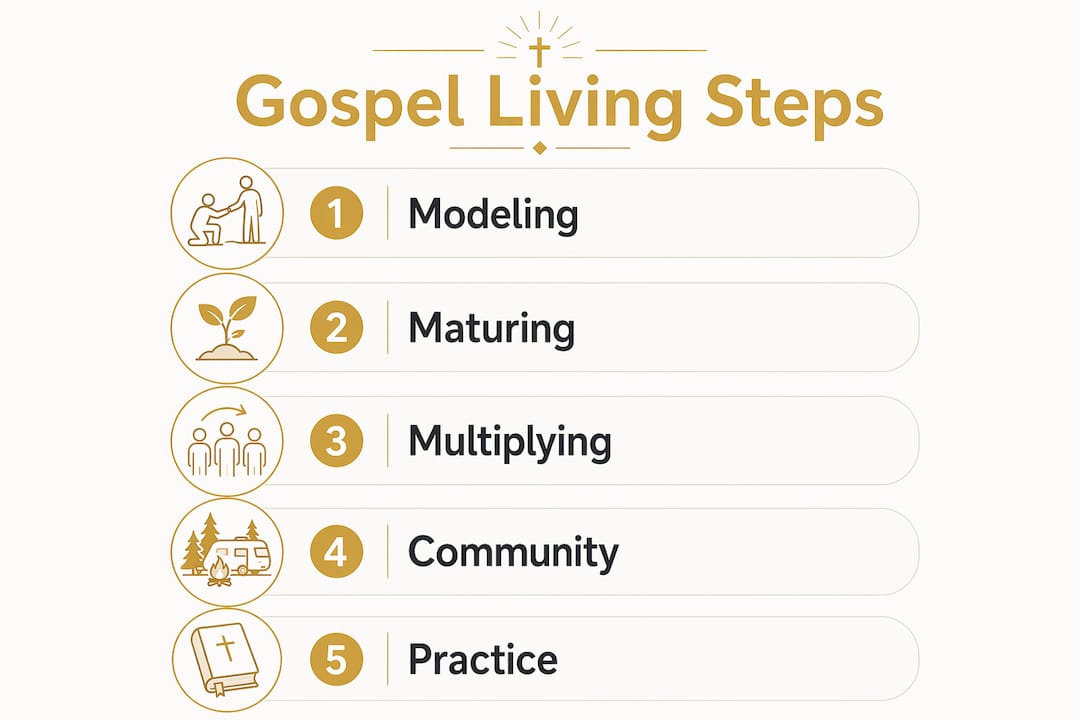
Gospel-centered living progresses through three recognizable phases: modeling, maturing, and multiplying. Modeling is the early stage where you observe and absorb faith from others around you. Maturing is the longer middle season where daily rhythms deepen your roots in Scripture, prayer, and community. Multiplying is where you begin to invest in others, not because you have arrived but because you have something worth sharing.
Spiritual multiplication does not require a platform or a title. Praying for and engaging with three people weekly, inviting conversations without pressure, and trusting God for growth is the natural approach that replaces high-pressure evangelism with relational discipleship. You do not need a program. You need three people and a genuine interest in their lives.
The following comparison shows the difference between a performance-based approach and a gospel-centered approach to daily spiritual practice:
| Practice | Performance-Based | Gospel-Centered |
|---|---|---|
| Scripture reading | Obligation to complete a reading plan | Listening for God's voice in your current situation |
| Prayer | Formal recitation to fulfill a duty | Ongoing conversation flowing from relationship |
| Serving others | Building a reputation for generosity | Responding to need out of gratitude for grace |
| Community involvement | Attending events to stay connected | Sharing life and accountability with others |
| Evangelism | Delivering a scripted message | Inviting natural conversations with people you already know |
Practical tools that support this lifestyle include daily Scripture meditation using resources like the YouVersion Bible App or a physical journal, structured prayer routines tied to existing habits like morning coffee or evening walks, and consistent involvement in a gospel-centered community. Rvlifeministries offers daily spiritual resources designed specifically for people living and traveling in RV communities, where traditional church structures are not always accessible.
Pro Tip: Join or form a small group of two to four people committed to the same gospel rhythms. Shared accountability is not a sign of weakness. It is the structure that makes long-term growth possible.
Key takeaways
A gospel-centered lifestyle is sustained by abiding in Christ daily, practicing eight core rhythms consistently, and growing through community rather than in isolation.
| Point | Details |
|---|---|
| Identity over behavior | Gospel living flows from who you are in Christ, not from what you perform for God. |
| Eight daily rhythms | Prayer, rejoicing, evangelizing, Scripture study, serving, instructing, nurturing, and giving form the core habits. |
| Abiding as the key practice | Remaining consciously connected to God throughout the day shifts motivation from obligation to gratitude. |
| Community prevents isolation | Discipleship and spiritual growth require shared accountability, not solo effort. |
| Ordinary faithfulness counts | Quiet, consistent obedience in daily life glorifies God more than occasional dramatic acts. |
What I have learned from years of gospel-centered living on the road
When I first started taking faith seriously, I was a rule-keeper. I tracked my Bible reading streaks, measured my giving percentages, and graded my prayer life like a report card. The result was a cycle of pride when I performed well and shame when I did not. Neither state produced genuine love for God or people.
The shift came when I stopped asking "Did I do enough today?" and started asking "Am I connected to Christ right now?" That is a smaller question, but it is the right one. The gospel-centered life is not built on annual spiritual breakthroughs. It is built on thousands of small moments of returning to Christ when you have drifted.
Traveling with Rvlifeministries and serving RV communities across America reinforced something I had read but not fully believed: the gospel shapes ordinary moments into worship, not just special religious actions. A conversation with a neighbor at a campsite, a meal shared with someone going through a hard season, a quiet morning with Scripture before the day starts. These are not lesser forms of faith. They are the substance of it.
My honest advice is to start smaller than you think you need to. Pick two of the eight daily rhythms and practice them for 30 days before adding more. Depth before breadth. And find at least one person to do it with you. The gospel was never meant to be lived alone.
— Bo
Grow your faith with Rvlifeministries
Rvlifeministries brings gospel-centered worship, teaching, and community directly to RV parks across America, meeting people where they are rather than waiting for them to find a building.
Whether you are looking for live teaching to anchor your week or a community of believers who understand life on the road, Rvlifeministries has resources built for your situation. Join a church livestream to stay connected to gospel-centered worship no matter where you are parked. Explore our core faith beliefs to ground your daily rhythms in solid theology. And if you want to support this work, your giving directly funds gospel ministry in RV communities that rarely see traditional church outreach.
FAQ
What is a gospel-centered lifestyle?
A gospel-centered lifestyle is a continuous daily way of living rooted in union with Christ, where identity, decisions, and habits flow from that relationship rather than from rule-following or religious performance.
How is gospel-centered living different from regular Christianity?
Gospel-centered living integrates faith into every area of life, including work, finances, and relationships, rather than treating faith as a Sunday activity. The motivation is gratitude for grace, not obligation or fear.
What are the core daily habits of gospel-centered living?
Eight practices define gospel-focused daily habits: prayer, rejoicing, evangelizing, Scripture study, serving, instructing, nurturing, and giving. Practiced consistently, these form a lifestyle rhythm rather than a checklist.
Why is community important for gospel-centered living?
Discipleship flourishes best in community where accountability, mutual service, and shared life prevent isolation and burnout. Spiritual growth is relational by design, not a solo pursuit.
Can you live gospel-centered without attending a traditional church?
Yes. Gospel-centered living is about abiding in Christ and practicing daily rhythms in community, which can happen through online worship, small groups, or ministry networks like Rvlifeministries that serve people outside traditional church settings.